
- Strategic partner of Global Fortune 500 companies, designated supplier for government projects worldwide
- Keep Your Project Moving Without Interruption
- Deliver Consistent Quality Across Every Pour
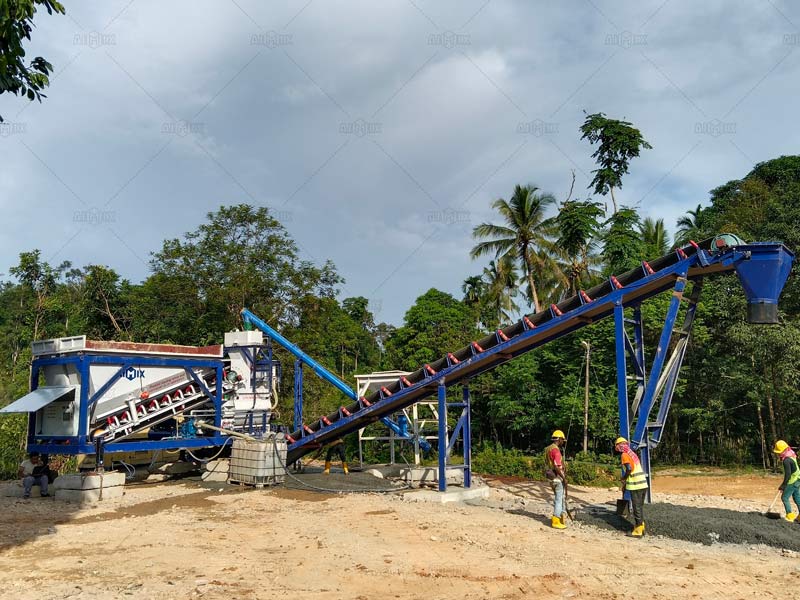
Have you ever faced construction delays because your concrete supply failed to keep pace with your tight schedule?
If you are working on a remote mining site, a temporary infrastructure project, or a dispersed small-to-medium-scale development, you understand the challenge all too well: setting up a stationary batching plant takes too long, while relying on the delivery of ready-mix concrete is simply too unreliable. You need more than just concrete—you need concrete delivered precisely when and where you need it.
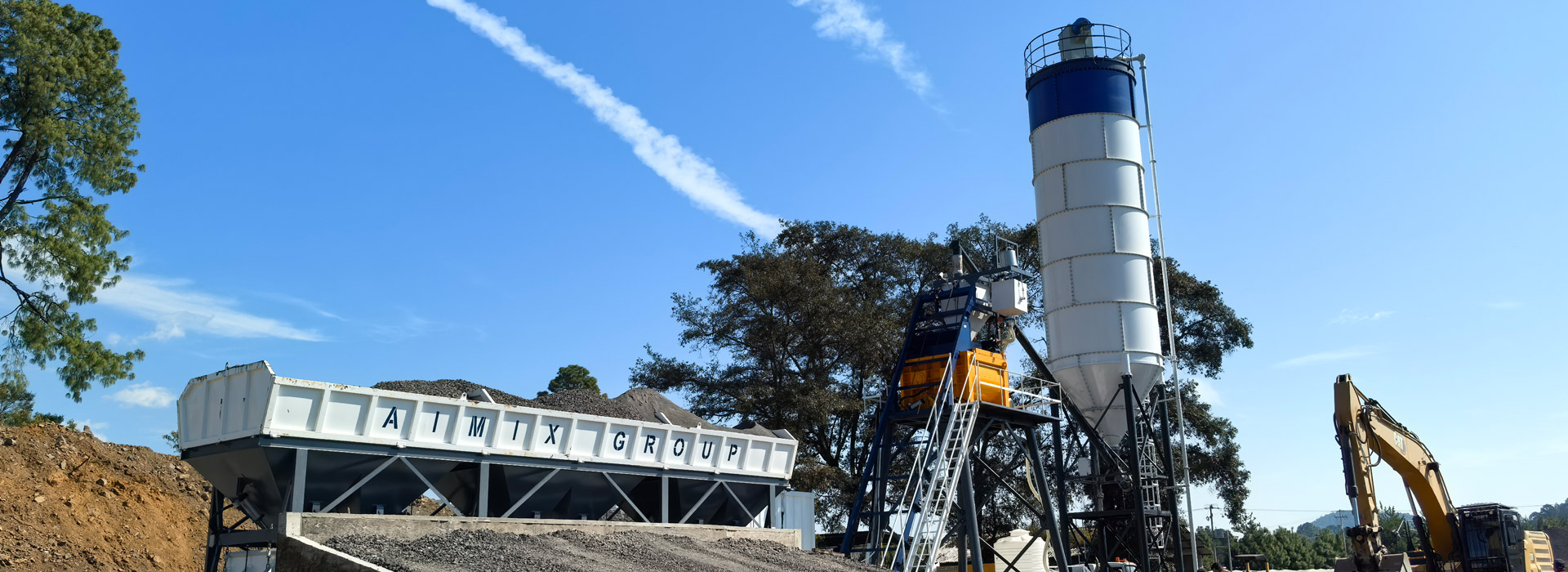
This is exactly the problem that portable batch plants are designed to solve. Engineered specifically for mobile operations, these plants can be rapidly deployed at the start of each new project phase, bringing production directly to your jobsite and completely eliminating the delays and limitations associated with off-site transportation. No matter how remote the location or how tight the deadline, these solutions ensure that your project stays right on track.
The Value of Portable Batch Plant
For many construction projects, concrete batch plant not only affects construction efficiency but also directly impacts scheduling, on-site management, and overall cost control. Especially when construction sites change frequently, project timelines are tight, or material supply is limited, the flexibility of the equipment is often more important than mere production capacity.
The value of a portable concrete plant lies not merely in its mobility. More importantly, it enables you to maintain a stable, efficient, and controllable concrete supply across a variety of project environments.
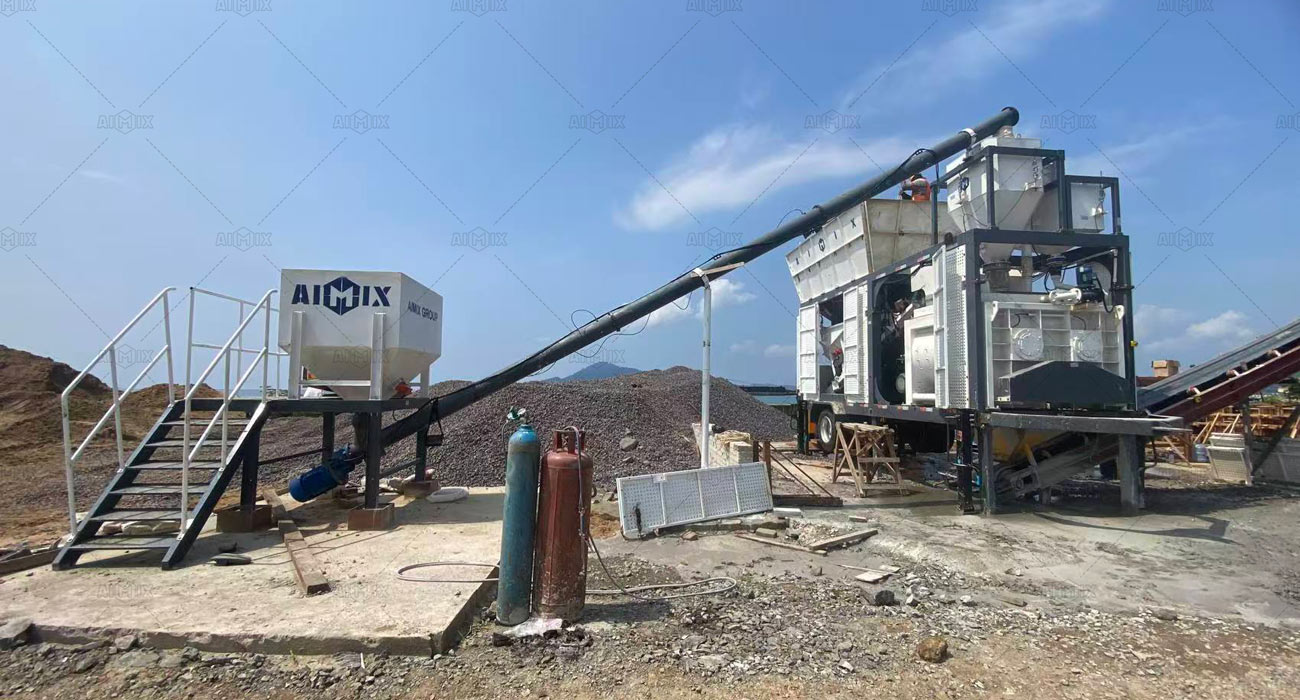
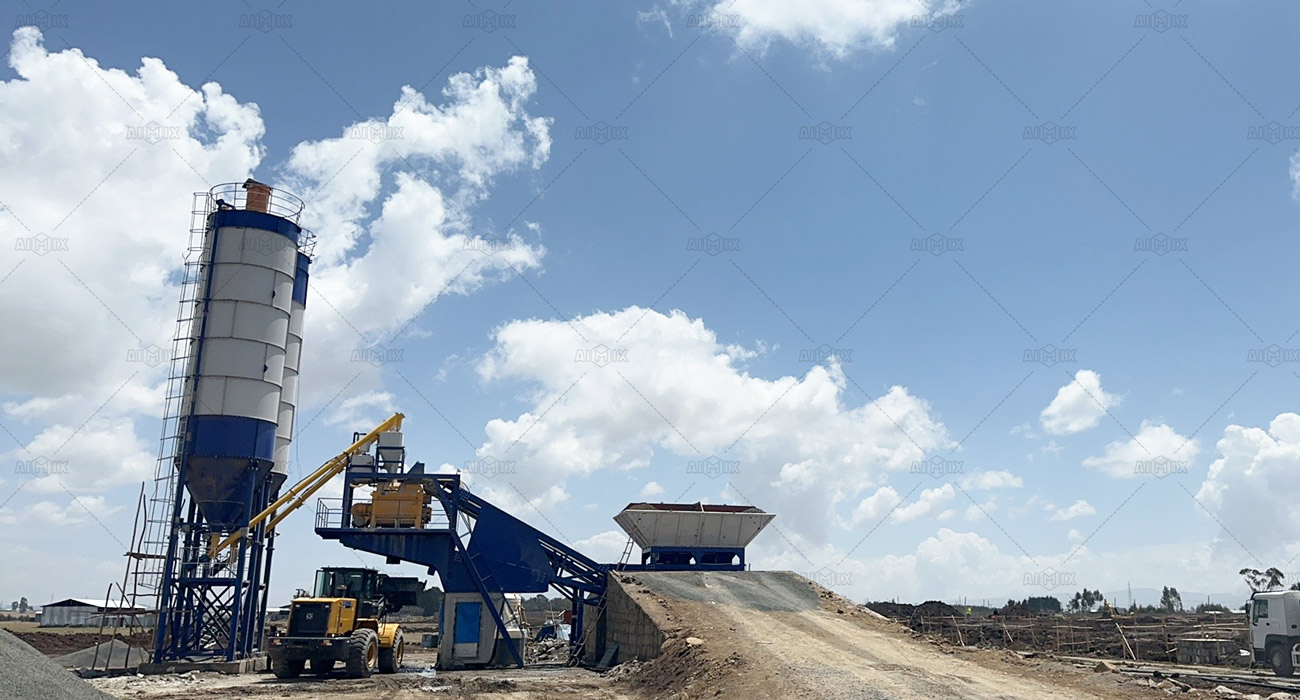
Greater flexibility in aligning with construction schedules
- Portable batching plant can be relocated according to project phases, reducing the pressure to adjust material supply caused by changes in construction areas
- In linear projects such as roads and bridges, it is easier to position equipment close to the construction site, reducing transportation distances
- When project timelines are tight, deployment and production can be initiated more quickly, reducing downtime
- For contractors rotating between multiple job sites, it is easier to improve equipment utilization
Reduces reliance on external concrete supply
- In remote areas, mountainous regions, or areas with inadequate infrastructure, on-site portable concrete batch plant provides greater stability
- Avoids supply delays caused by long-distance transport of ready-mix concrete
- During peak construction periods, reduces project delays caused by tight external supply
- For projects requiring continuous pouring, it is easier to maintain a steady supply rhythm
Helps control overall project costs
- Reduces fuel, labor, and time costs associated with long-distance transportation
- Compared to building a complete fixed plant, the initial investment for on-site construction is lower
- Portable concrete batching plant can be reused across multiple projects, reducing long-term equipment investment pressure
- For phased projects, it prevents fixed equipment from remaining idle for extended periods
Enhance Proactivity in On-Site Construction
- Concrete portable batch plant production schedules can be flexibly adjusted to accommodate on-site construction plans
- Easier to adapt to last-minute changes in construction schedules or unexpected situations
- Greater flexibility in accommodating special mix designs and phased production requirements
- Construction teams can more directly control the pace of material supply and production quality
Reducing Equipment Installation and Relocation Time
- Modular design reduces on-site installation workload
- Certain components can be transported as-is, minimizing disassembly and reassembly steps
- Faster commissioning enables projects to enter the construction phase sooner
- Upon project completion, equipment removal and deployment for the next project are also easier
Maintain Stable Production in Complex Construction Environments
- Capable of adapting to usage requirements across different regions and construction conditions
- Maintains strong adaptability even at remote job sites or in areas with inadequate infrastructure
- Automated control systems help maintain production stability
- For continuous construction projects, batching plant portable is easier to maintain consistent concrete quality and production efficiency
Choosing a portable batch plant is not merely about adding a set of production equipment; it’s about gaining greater control over construction operations as your project progresses. Whether it’s site relocation efficiency, consistent material supply, or adaptability to project requirements, it empowers your construction team to respond more flexibly to ever-changing project conditions. This allows you to maintain construction schedules while striking a better balance between costs, efficiency, and on-site management pressures.
On-Site Insights: The Real Application of Portable Batch Plants
The value of portable concrete batch plants lie in the ability to adapt to on-site changes, maintain a stable supply of materials across various construction environments, and help projects reduce downtime and accelerate construction progress.
Currently, AIMIX portable concrete batch plants for sale are already in use across a variety of scenarios, including rural infrastructure construction, multi-site rotation projects, and construction in remote areas. Faced with varying project timelines, construction conditions, and material supply requirements, the equipment’s deployment efficiency, mobility, and on-site adaptability have been consistently validated in real-world projects.
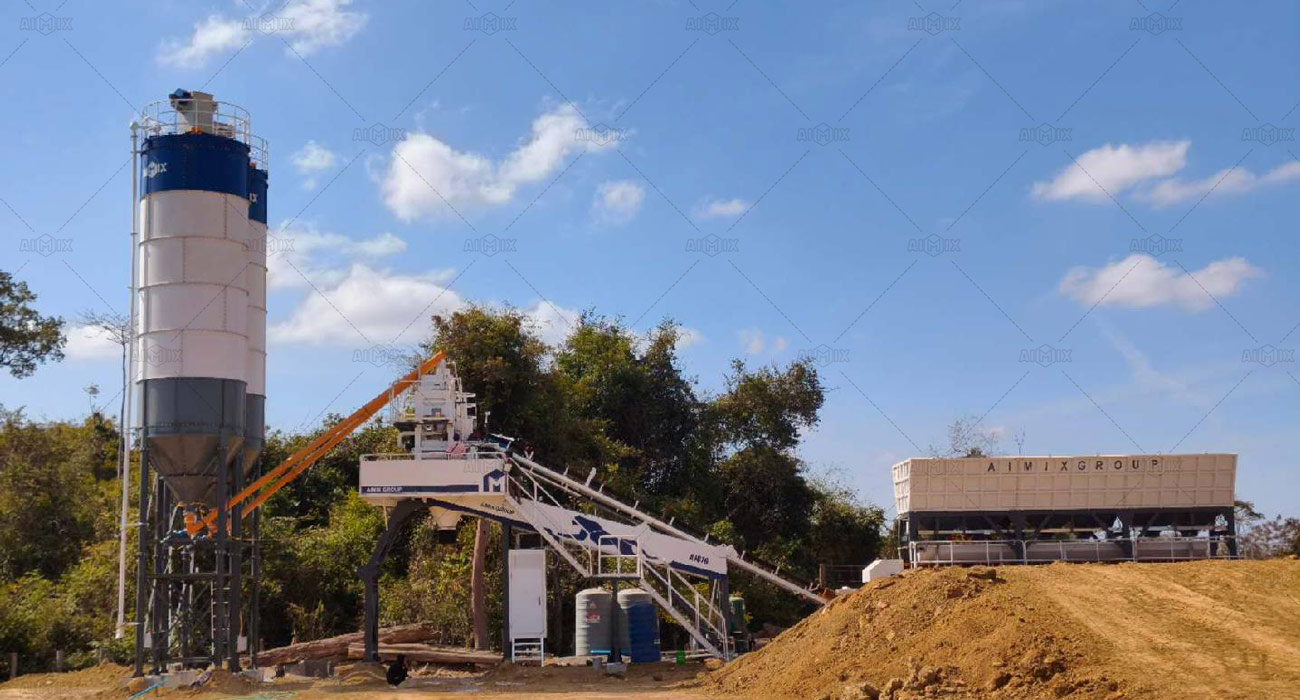
AJY70 Portable Batch Plant for Infrastructure Construction in Laos
- Project Date:2026.1
- Project Condition: The project site was far from stable ready-mix supply areas, and the customer wanted to reduce the impact of transportation limitations on project progress.
- Equipment Value: AIMIX help the project establish a more stable on-site concrete supply system. Project The plant could be flexibly deployed according to project progress, making it suitable for phased construction environments. The customer also reduced the time and management pressure caused by long-distance transportation.
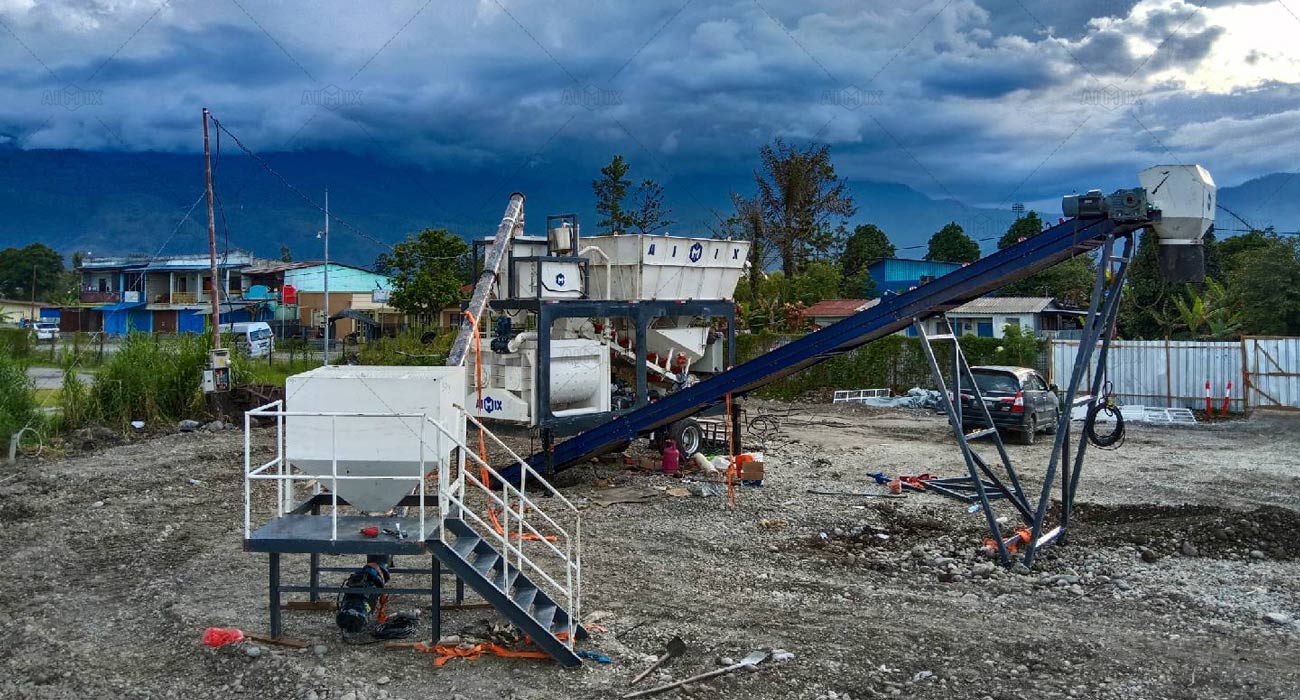
AJSY40 Portable Concrete Plant for Fast On-Site Supply in Indonesia
- Project Date:2026.4
- Project Condition: The customer had a tight project schedule and expected the plant to be installed and operational quickly.
- Equipment Value: The AJSY40 adopted a portable design that reduced on-site installation work and shortened project preparation time. For the contractor, faster commissioning meant entering stable construction stages earlier. The automatic control system also helped the customer maintain stable concrete production efficiency.
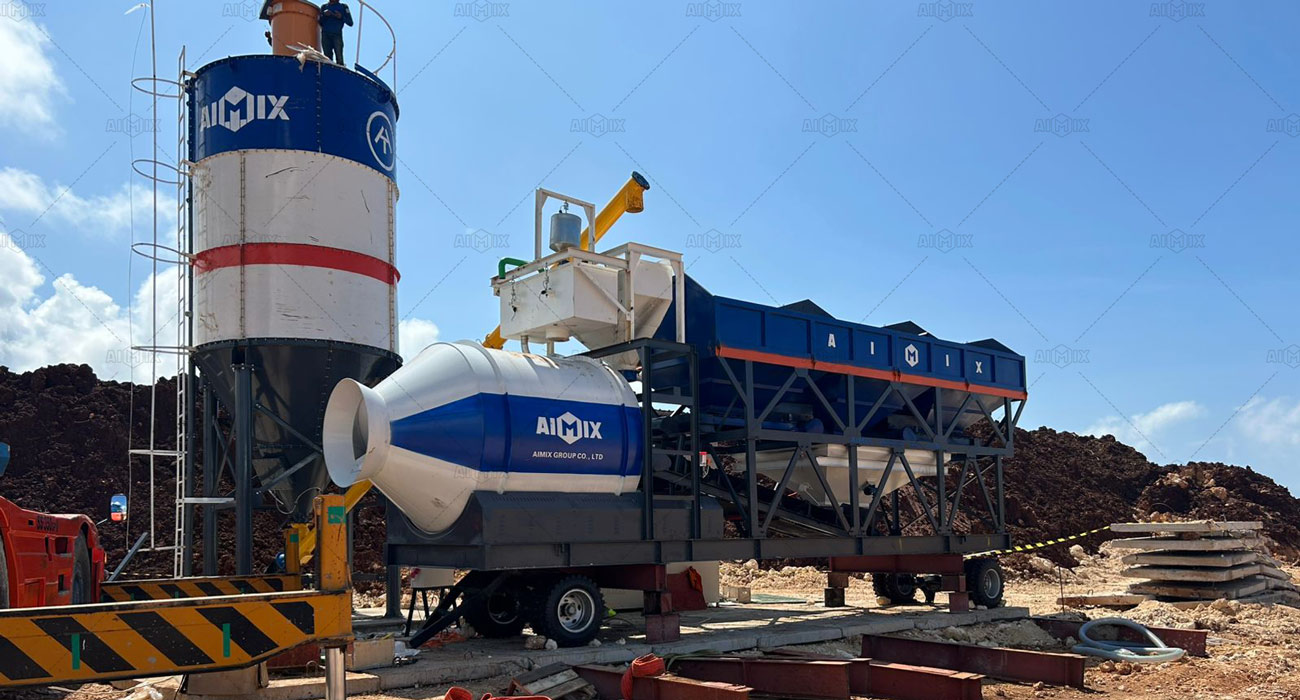
AJZY50 Portable Batch Plant for Multi-Scenario Construction in Bali, Indonesia
- Project Date:2025.6
- Project Condition: Some construction areas in Bali had limited space, and the customer needed equipment that balanced production capacity with mobility.
- Equipment Value: The AJZY50 was better suited for flexible construction environments and could be repositioned according to different construction stages. Compared with fixed supply methods, on-site production gave the customer greater flexibility in construction scheduling.
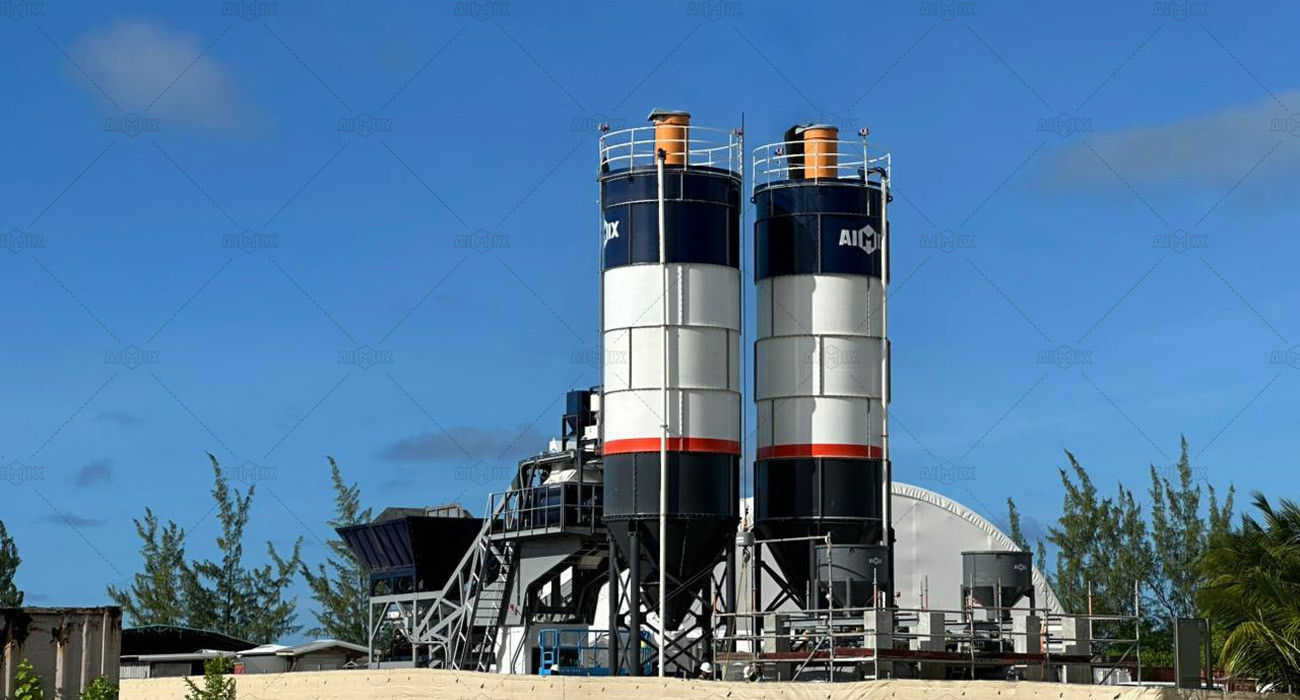
AJY60 Portable Concrete Batching Plant for Efficient Supply in the United States
- Project Date:2025.8
- Project Condition: The customer wanted to improve on-site concrete supply responsiveness while maintaining concrete quality.
- Equipment Value: The AJY60 helped reduce waiting time for external concrete supply. The plant could be relocated according to project progress, making it suitable for multi-phase construction projects. AIMIX team also provided installation and commissioning support, helping the project enter stable production more quickly.
What these projects have in common is that they all place higher demands on the flexibility of concrete supply at construction sites. From rapid deployment to stable operation, and from reducing reliance on transportation to adapting to multi-phase construction, the adaptability of portable concrete plants for sale under various conditions makes them not only an equipment option but also an optimized approach to construction organization.
Adapting Portable Concrete Batching Plants to Various Construction Rhythms
From infrastructure construction to projects in remote areas and small-scale decentralized projects, wet concrete batching plant often must contend with a variety of practical considerations: whether construction sites change frequently, whether project scales fluctuate, whether a stable material supply is available on-site, and whether relocation and deployment timelines are tight. Differences among projects in terms of production capacity requirements, mobility frequency, and construction pace directly dictate that portable concrete plant for sale must possess greater adaptability rather than adhering to a single, fixed model.
Based on these real-world construction variations, AIMIX has categorized its portable batch plants for sale into different series. By adjusting structural designs and configuration combinations, the equipment can more precisely match the actual operational needs of your various project types.
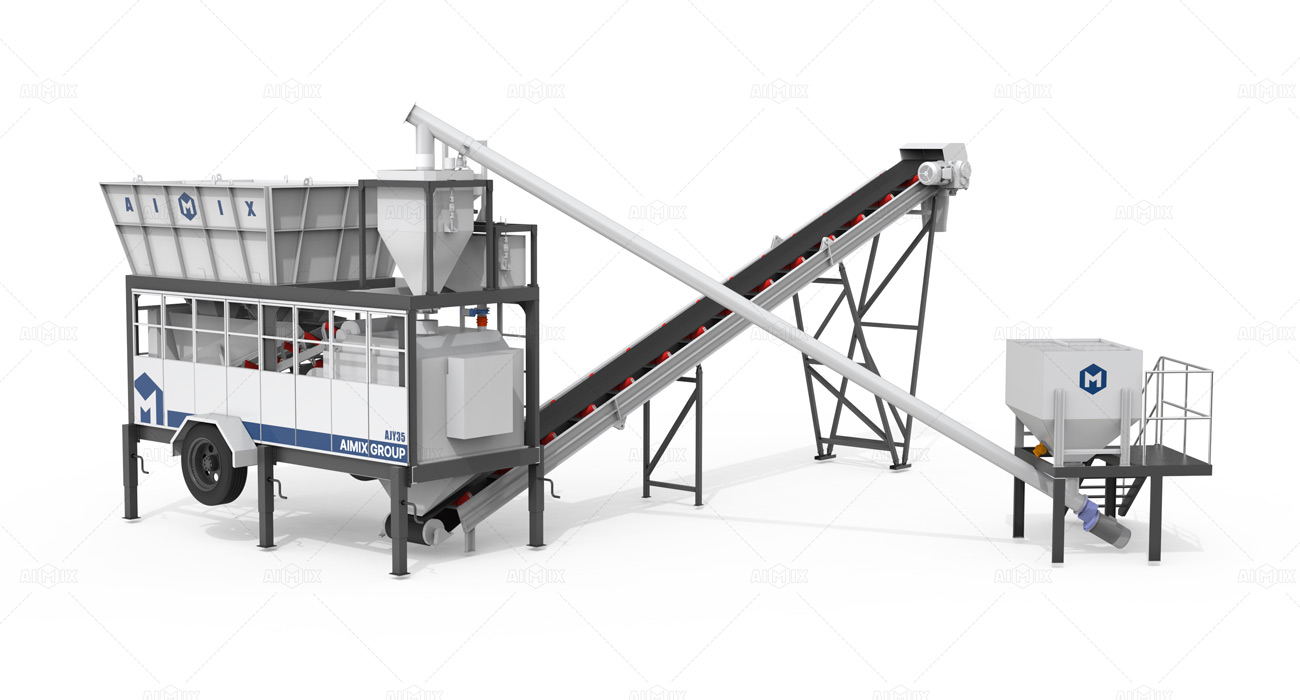
AJSY Series—Factory-Prefabricated, Integrated, Rapid-Deployment Type
- Rapid commissioning, reduced downtime: Factory pre-assembly + modular design significantly shortens on-site installation time, and with smart remote control operation, a single operator can complete commissioning.
- Adaptable to varied job sites, reduced foundation requirements: Foundation-free or light-foundation design; efficient operation ensures stable production even on complex sites.
- Cross-project usability, reducing relocation costs: Modular disassembly + standardized transportation; weighing accuracy of 1%; simultaneous weighing and mixing enable continuous production and improve small concrete batch plant utilization.
- Stable production, minimizing human error: remote monitoring and adjustment guarantee consistent and reliable concrete in every batch.
| Parameter | AJSY20 | AJSY40 |
|---|---|---|
| Theoretical productivity (m³/h) | 20 | 40 |
| Mixer discharge volume (L) | 500 | 1000 |
| Mixer feeding volume (L) | 750 | 1500 |
| Mixer power (kw) | 18.5 | 18.5×2 |
| Discharge height (m) | 4.1 | 4.1 |
| Aggregate bin configuration (number × single bin volume, m³) | 2×4.5 | 2×4.5 |
| Cycle time (s) | 60 | 60 |
| Maximum aggregate particle size (mm) | 60/80 | 60/80 |
| Cement silo (optional) | 1×100 | 1×100 |
| Aggregate weighing system | ±2% | ±2% |
| Powder weighing system | ±1% | ±1% |
| Water weighing system | ±1% | ±1% |
| Additive weighing system | ±1% | ±1% |
| Installed power (kw) | ≈50 | ≈70 |
| Control mode | Buttons + Touch Screen + Remote Control | |
| Power supply | 220V/415V/440V/380V, 50Hz/60Hz, three-phase | |
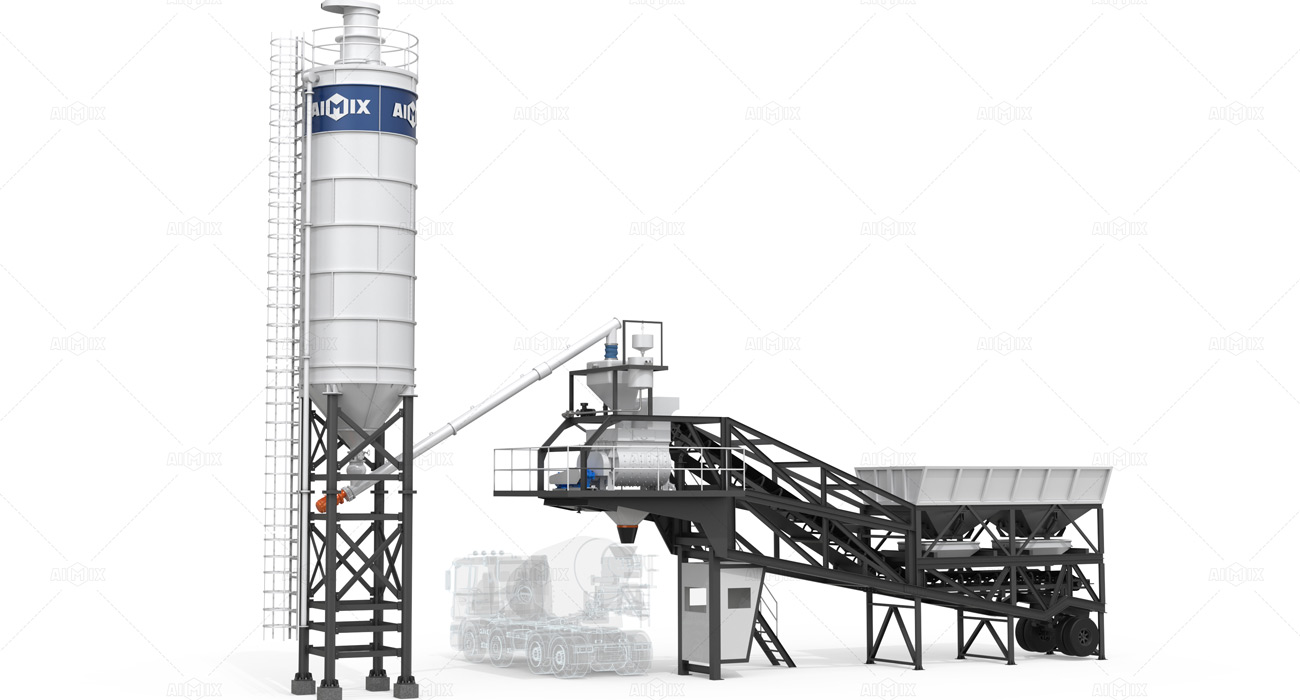
AJY Series — Mobile Type for Towing and Relocation
- Improves equipment mobility between multiple job sites and reduces project downtime: Wheeled chassis design in mobile concrete batching plant allows for towing and relocation, meeting the needs of frequent site changes
- Suitable for small-to-medium-sized projects, avoiding wasted capacity: Designed with a production capacity of 25–75 m³/h, better suited for projects such as rural roads and small bridges
- Reduces site and foundation requirements, expanding construction applicability: Low requirements for site levelness allow for rapid deployment at temporary construction sites
- Reduces operational complexity and improves on-site management efficiency: Automated control systems simplify production processes and reduce reliance on manual labor
| Model | AJY-25 | AJY-35 | AJY-50 | AJY-60 |
|---|---|---|---|---|
| Theoretical Productivity (m3/h) | 25 | 35 | 50 | 60 |
| Mixer Model (Mixer Output L) | JS500 | JS750 | JS1000 | JS1000 |
| Mixer Power (kW) | 18.5 | 30 | 2×18.5 | 2×18.5 |
| Mixing Cycle Period (s) | ||||
| Rated Input Volume (Model of Batching Machine L) | 800 | 1200 | 1600 | 1600 |
| Standard Aggregate Bin Capacity (m3) | 2×3 | 2×5 | 2×5 | 3×8 |
| Category of Aggregate | 2/3/4 | 2/3/4 | 2/3/4 | 2/3/4 |
| Overall Weight (ton) | ≈15 | ≈22 | ≈26 | ≈26 |
| Installation Power (kW) |
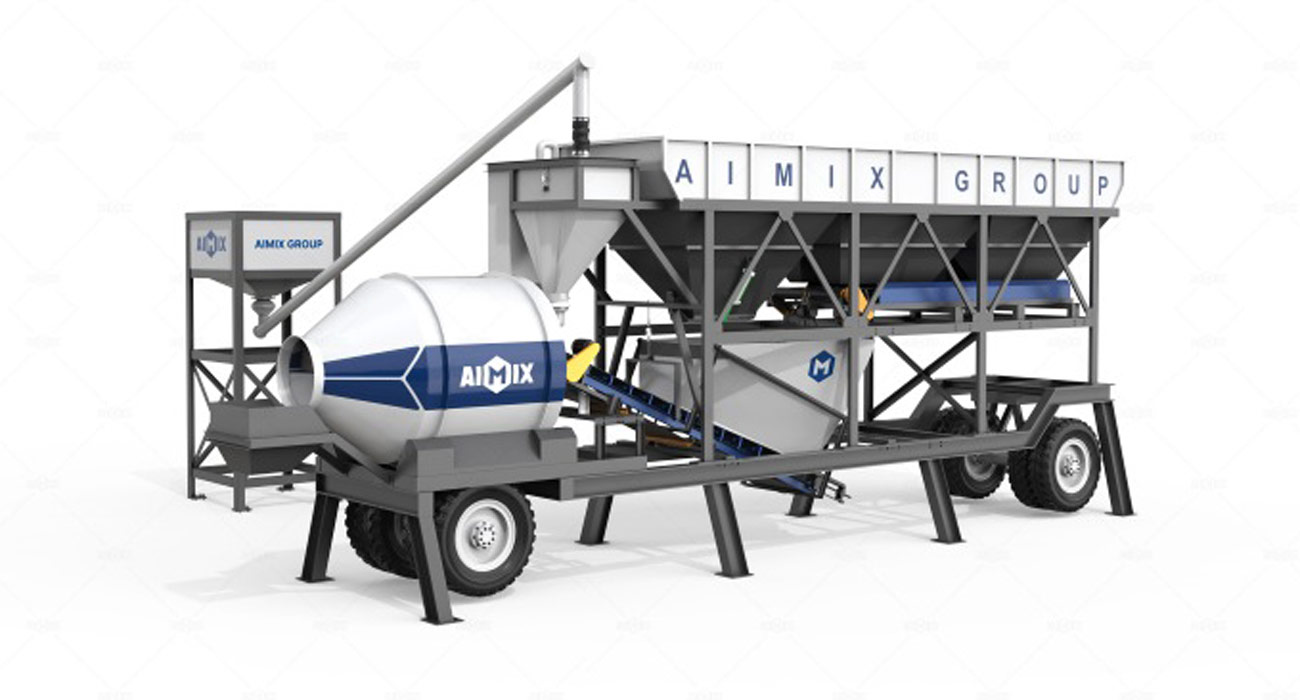
AJZY Series—Simplified Structure, Cost-Effective
- Helps control overall costs for small-scale projects: With a simplified structure and lower energy consumption, it is ideal for budget-sensitive projects
- Suitable for small-batch continuous feeding, enhancing construction flexibility: With a capacity of 10–75 m³/h, it is well-suited for rural and small-scale infrastructure projects
- Lowers the operational threshold and reduces staff training costs: Semi-automatic or simplified control systems allow for quick on-site operation
- Overcomes site constraints and adapts to more complex construction environments: Compact footprint allows for flexible deployment in areas with limited space
| Parameter | Model | Unit | AJZY-40 | AJZY-60 |
|---|---|---|---|---|
| Theoretical production efficiency | Cubic meters per hour | 30-40 | 50-60 | |
| Drum mixer | -Kilowatts | JZM1000 | JZM1500 | |
| Motor power | kW | 7.5×2 | 11×2 | |
| Mixing time | second | 40 | 40 | |
| Discharge height | meters | 1.3 | 1.3 | |
| Batching machines | Dosing machine | -cubic meters | PLD1200 | PLD1600 |
| Hopper capacity | Cubic meters | 5×2/3 | 8×2/3 | |
| Motor power | kilowatt | 4×2 | 4×3 | |
| Sensor | kilogram | 2000×3 | 2000×3 | |
| Cylinder | - | 100×250 | 100×250 | |
| Belt size | millimeters | 10400×500×2; 4200×500×1 | 10400×500×2; 4200×500×1 |
|
| 9000×600×1 | 9000×600×1 | |||
| Feeding height | millimeter | 3200 | 3200 | |
| Cement weighing system | Weighing precision | - | ±1% | ±1% |
| Water weighing system | Weighing accuracy | - | ±1% | ±1% |
| Pump power | Kilowatts | 3 | 3 | |
| Additive weighing system | Weighing accuracy | - | ±1% | ±1% |
| Additive pump power | Kilowatts | 1.1 | 1.1 | |
| Chassis | (Equipment) Size | millimeter | 8410×2000×780 | 11100×2000×780 |
| Tire size | millimeter | 1000 | 1000 | |
| Control systems | Electronic components | - | ZHENG TAI | ZHENG TAI |
| Control system | - | PLY1000 Semi-automatic control system | PLY1000 Semi-automatic control system |
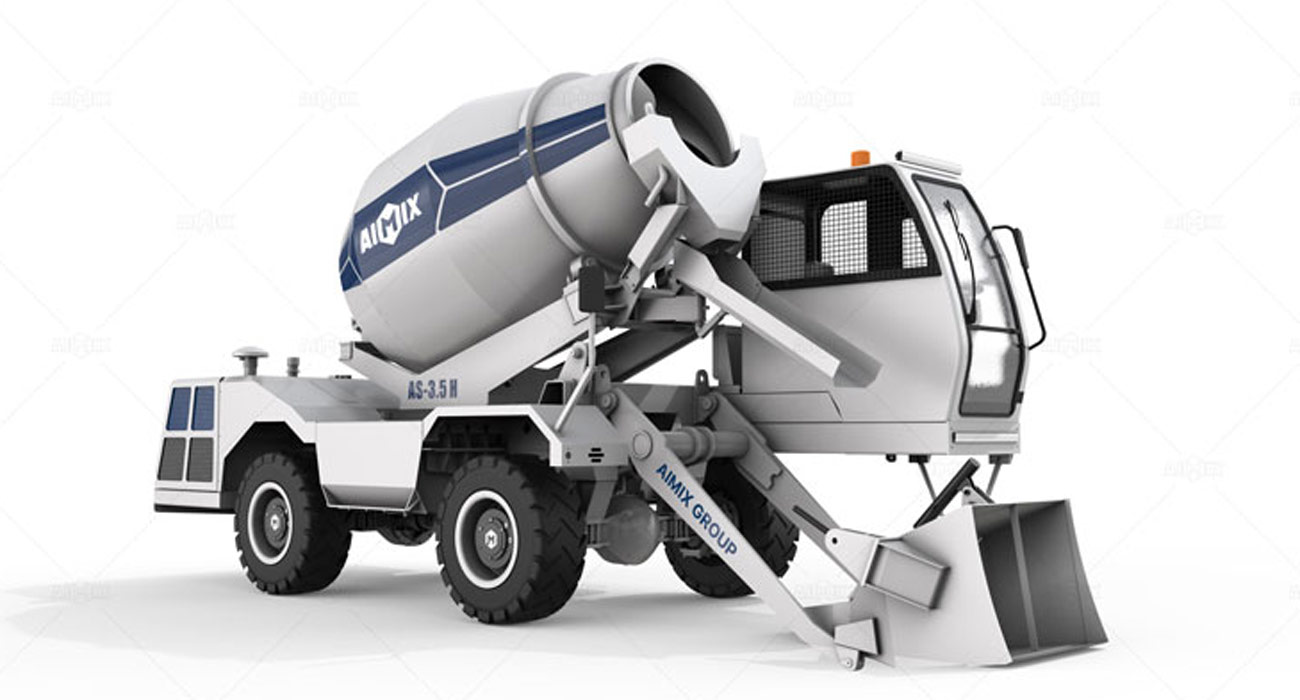
AS Series — An Efficient and Flexible Concrete Transportation Solution
- Rapid material supply, reducing construction downtime: The integrated on-board mixing and transport design allows for direct material pickup from the plant or site, maintaining concrete uniformity during transport, shortening wait times, and improving construction continuity.
- Flexible scheduling, adaptable to multi-site environments: The vehicle offers high maneuverability, enabling rapid access to multiple construction locations. It adapts to urban sites, rural roads, or narrow job sites, minimizing concrete transport constraints.
- Easy operation, reduced labor costs: Combining intelligent controls with hydraulic operation, a single operator can complete the loading, transport, and unloading processes, reducing the need for on-site personnel and improving construction efficiency.
| Model | AS-1.2 | AS-1.8 | AS-2.6 | AS-3.5 | AS-4.5 | AS-5.5 | AS-6.5 |
|---|---|---|---|---|---|---|---|
| Wheel base(mm) | 2300 | 2750 | 2800 | 2900 | 2480 | 3350 | 2850 |
| Weighing method | Automatic hydraulic weighing system | Automatic hydraulic weighing system | Automatic hydraulic weighing system | Automatic hydraulic weighing system | Automatic hydraulic weighing system | Automatic hydraulic weighing system | Automatic hydraulic weighing system |
| Water tank (L) | 400 | 500 | 500 | 620 | 920 | 860 | 1465 |
| Total weight (Kg) | 5000 | 6100 | 7100 | 7900 | 9200 | 11500 | 12520 |
| Overall size (LxWxH) | 6400x2550x3300 | 7700×2750×3350 | 7860×2750×4100 | 7830×2680×4170 | 7640×2870×4750 | 8450×3100×3640 | 8450×3050×3860 |
| Mixing tank capacity(m³) | 1.2 | 1.8 | 2.6 | 3.5 | 4.5 | 5.5 | 6.5 |
| Mixer drum capacity (L) | 1700 | 2680 | 3580 | 4740 | 6800 | 7800 | 9000 |
| Min. turning radius (mm) | 4700 | 3250 | 5300 | 5300 | 4800 | 6200 | 4800 |
| Max. Speed (km/h) | 30 | 35 | 30 | 30 | 35 | 42 | 40 |
| Hydraulic tank (L) | 63 | 75 | 75 | 120 | 120 | 180 | 274 |
| Fuel tank (L) | 63 | 75 | 75 | 120 | 120 | 180 | 342 |
| Engine power (kw) | 55 | 78 | 78 | 91 | 91 | 110 | 132 |
| Drum speed (r/min) | 13 | 13 | 13 | 13-20 | 17 | 20 | 20 |
| Concrete output(m³/h) | 4.8 | 7.2 | 10.4 | 14 | 18 | 22 | 26 |
Overall, small portable concrete batch plants from different series are essentially designed to strike a balance between mobility, deployment speed, cost control, and production capacity. When making your selection, the key consideration is whether the equipment can truly adapt to changes in the project’s pace and maintain a stable, controllable concrete supply under varying construction conditions.
Matching Portable Concrete Mixing Plants to Your Project
In actual projects, start the concrete batching plant business plan is often not based solely on production capacity or price, but requires a comprehensive consideration of multiple factors, including the construction schedule, frequency of relocation, site conditions, material supply methods, and whether the equipment will be reused across future projects. Different projects place varying emphasis on mobility and production capacity of portable concrete mixer batching plants; selecting equipment based on a single criterion can easily lead to overcapacity, difficulties in relocation, or low operational efficiency.
Through years of project experience, AIMIX has observed that many clients tend to overlook the alignment between construction schedules and changing site conditions during the initial selection process. Therefore, we provide clear configuration recommendations based on professional expertise and tailored to the specific circumstances of your project, with the aim of helping you make more informed decisions under various engineering conditions.
| Project Type | Core Concern | Recommended Configuration | Must-Have Customization | Optional Optimization |
|---|---|---|---|---|
| Linear projects (bridges / road segment construction) | Can the plant move along with construction progress efficiently? | AJY / AJSY | Fast relocation structure, enhanced integrated mobility, stable continuous production | Automation upgrade, remote monitoring |
| Remote area projects (mountainous / mining / no ready-mix supply) | Can it produce independently without external concrete supply? | AJSY | Diesel / dual power system, dust & water resistance design, enhanced environmental adaptability | Environmental monitoring system |
| Temporary projects (short duration / fast-start construction) | Can it be installed and commissioned quickly? | AJSY | Factory pre-assembled structure, foundation-free design, quick connection system | Basic automation upgrade |
| Multi-project rotation (contractors / rental companies) | Equipment utilization rate and relocation cost | AJY | Modular disassembly design, standardized transport structure, fast reuse capability | Data management system |
| Small-scale distributed projects (rural / small construction sites) | Is cost controllable and operation simple? | AJZY / AJY | Simplified control system, small capacity matching, low maintenance design | Semi-automatic upgrade |
The selection process for this component is actually quite straightforward: by clearly defining key factors such as mobility, deployment speed, production capacity, and environmental adaptability, you can largely avoid making the wrong choice and ensure that the mini portable concrete batch plant truly supports the construction schedule rather than becoming an additional burden.
If you are currently planning a project but are unsure which portable batch plant configuration to choose, simply let us know your project type, construction site, and production capacity requirements. We can provide you with tailored recommendations to ensure the equipment configuration aligns perfectly with your actual operational needs.
Self-Supply vs. Buying Ready-Mix Concrete
In many projects involving portable concrete plants, clients typically rely on external ready-mix concrete suppliers during the early stages of construction. This is a very common practice, especially when equipment has not yet been delivered to the site or the project is just getting underway, as the existing supply chain allows construction to begin more quickly.
This approach can indeed meet basic construction needs for a certain period and reduces initial equipment investment and management complexity, which is why it is widely adopted in many projects. However, as the scope of construction expands, the number of work sites increases, or the project enters a multi-phase implementation stage, the alignment between the supply schedule and the construction site becomes increasingly critical. At this point, the differences between various supply methods also become more apparent.
| Portable Batch Plant | Comparison Dimension | Ready-Mix Concrete Supply |
| Concrete can be produced on-site and adjusted according to construction progress | Supply Stability | Depends on external suppliers, affected by delivery scheduling and transport conditions |
| Very low (mainly raw material transport) | Transportation Cost | High transportation cost, significantly affected by distance |
| Production can be adjusted anytime based on project needs | Construction Flexibility | Must follow supplier delivery schedule and routing |
| Mobile projects, remote sites, segmented construction | Applicable Scenarios | Urban fixed-site projects, short-distance supply projects |
| Fully controllable on-site, mix can be adjusted in real time | Quality Control | Depends on supplier standards, limited adjustment flexibility |
| Not affected by external supply delays | Impact on Project Schedule | Easily affected by traffic, queueing, or supply shortages |
| Requires equipment investment but reusable across projects | Initial Investment | No equipment investment, but continuous purchasing cost |
| Cost decreases over time with multi-project reuse | Long-term Cost | Continuous per-cubic-meter cost accumulation over time |
In practice, these two approaches are typically chosen based on different project phases rather than being simple alternatives to one another. It is very common and reasonable for some projects to rely more heavily on external ready-mix concrete in the early stages to get construction up and running quickly; however, as the scope of construction expands and the timing of material delivery becomes more critical, many projects begin to reassess whether they need greater autonomy and stability in their concrete supply.
If you are currently at a similar stage in your project, you might want to review this comparison chart again, taking into account factors such as construction distance, project schedule, and the progress across multiple sites—this may help you make a clearer decision.
One Machine, Many Users: On-Site Versatility
As can be seen from the previous comparison of options, the selection of a portable concrete plant for different projects is rarely determined by a single factor, but rather by the combined influence of multiple conditions.
However, in the actual implementation of projects, there is rarely just one person responsible for evaluating the equipment. Some are more concerned with whether construction can be completed on schedule, others prioritize the stability of on-site material supply, and still others assess suitability from the perspective of cost recovery or long-term value. Precisely because of these differing priorities, AIMIX has incorporated distinct design features into our portable batch plants to address various operational needs.
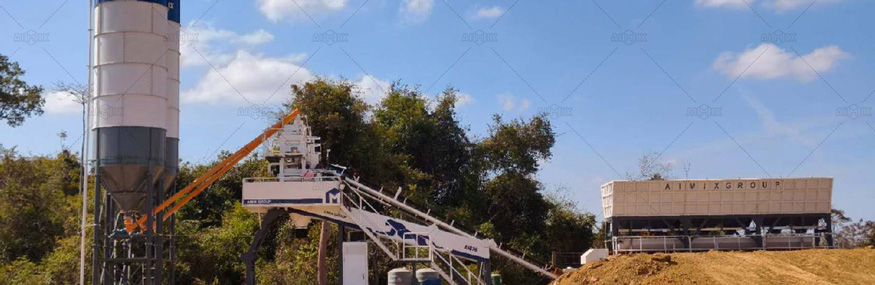
EPC General Contractor Project Manager | Overall Project Schedule and Delivery Control
- Client Concerns: Greater focus on whether the overall project schedule is manageable and whether different construction phases can transition smoothly, to avoid schedule delays caused by unstable concrete supply.
- AIMIX Solution: Through modular structural design and rapid deployment capabilities, equipment can be flexibly relocated according to project phases, thereby reducing reliance on external supply chains and ensuring a more stable and controllable overall construction schedule.
On-Site Construction Manager | Continuous Construction and Supply Stability
- Client Concerns: As they are directly responsible for construction execution, they place high demands on the continuity of concrete supply. Especially during phased construction or continuous pouring, any instability in material supply will disrupt the overall construction schedule.
- AIMIX Solution: Through a stable, continuous production system and flexible capacity adjustment capabilities, the site can maintain a steady supply of concrete, reducing the risk of construction interruptions.
Equipment Management Manager | Equipment Scheduling and Maintenance Efficiency
- Client Concerns: They focus on whether portable concrete batch plant can be easily deployed across different projects, as well as whether daily maintenance is complex and could affect equipment utilization rates.
- AIMIX Solution: The equipment features a standardized modular design, enabling rapid disassembly, transportation, and redeployment. Additionally, key components are easy to maintain, and most repairs can be performed on-site, thereby improving overall operational efficiency.
Project Procurement Manager | Investment Costs and Long-Term Returns
- Client Concerns: Primary focus on whether concrete batch plant price is reasonable and whether costs can be amortized over the long term to avoid excessive investment in any single project.
- AIMIX Solution: The portable concrete batching plant is reusable and can be deployed across multiple projects, reducing relocation and infrastructure costs while improving overall return on investment.
Leasing Company Operations Manager | Equipment Versatility and Market Adaptability
- Client Concerns: Emphasis on whether equipment can adapt to different types of projects, thereby ensuring high rental rates and long-term asset turnover efficiency.
- AIMIX Solution: The batching plant portable features standardized and stable structural designs, making it suitable for road, bridge, and various temporary construction scenarios, thereby enhancing equipment versatility and long-term operational value.
By examining the practical concerns of different stakeholders, it becomes clear that the value of a portable batch plant lies not only in its technical specifications but also in its ability to adapt to the operational logic and management needs of various users within complex project environments.
When designing such equipment, AIMIX focuses on practical issues such as ease of use on-site, project controllability, and the smoothness of site relocation, ensuring the equipment maintains consistent production performance across a variety of construction conditions. Whether for multi-site construction, phased implementation, or cross-project reuse, stable system configurations and mature engineering designs ensure the continuous reliability of concrete supply.
AIMIX Complete Expertise
Over the years, AIMIX has consistently placed customer needs at the center of its operations, continuously refining its product and service offerings. Every technological upgrade and every successful project implementation is designed to better assist our customers in overcoming construction challenges and enhancing the efficiency and reliability of concrete supply. The success of our portable concrete batch plants for sale is also rooted in this philosophy.
In-House Manufacturing Facilities and Production Capabilities
- Complete Production Chain: AIMIX maintains a comprehensive production system ranging from component machining to complete unit assembly, ensuring that every portable concrete plant for sale meets strict quality standards before leaving the factory.
- Rigorous Quality Control System: Each unit undergoes multiple rounds of testing and commissioning before shipment, ensuring stable operation upon arrival at the site and saving customers time on commissioning.
- Continuous Innovation: Our R&D and production teams work closely together to continuously optimize modular designs and transport structures, enabling the equipment to adapt to a wider range of complex engineering scenarios.
Technical and Service Teams
- Professional Technical Support: AIMIX has a team of experienced engineers who provide professional equipment selection solutions and technical support tailored to different projects, helping customers efficiently plan their construction schemes.
- Customer-Centric Service System: From pre-sales consultation to post-sales maintenance, every step is guided by customer needs, ensuring stable and reliable portable concrete mixing plant operation throughout the entire project.
- Training and Guidance: We provide training and operational guidance to on-site project personnel, enabling customers to quickly master equipment operation and reduce the risk of human error.
Extensive Case Studies and Global Experience
- Experience in Projects Across Multiple Countries: AIMIX portable concrete mixer batching plants have successfully served road, construction, and temporary construction projects in numerous countries, demonstrating the equipment’s adaptability in diverse environments.
- Proven Performance Across Diverse Projects: Whether for short-term temporary projects or multi-phase continuous construction projects, AIMIX equipment reliably ensures a steady concrete supply, enabling controlled construction schedules.
- Customer Feedback-Driven Optimization: Every project experience is leveraged to improve our products and services, ensuring that future customers enjoy a more efficient and reliable equipment experience.
AIMIX as a leading batching plant manufacturer, consistently prioritizes our customers’ actual needs, steadily enhancing our technical capabilities and service standards. Our portable concrete plants not only embody advanced modular design and stable, reliable performance, but also reflect our commitment to continuously creating value for our customers.
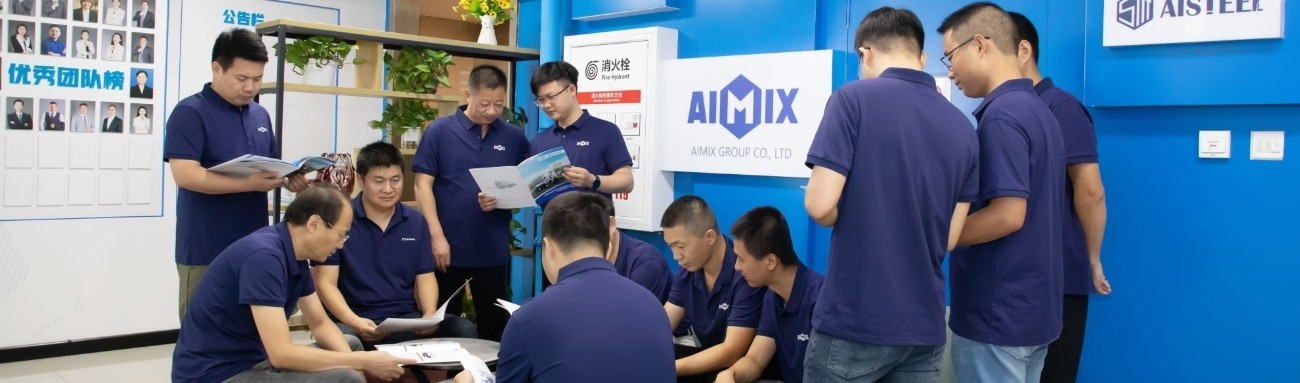
Moving forward, AIMIX will continue to leverage our professional approach, combined with our accumulated project experience and R&D capabilities, to provide flexible, efficient, and reliable concrete production solutions to an even wider range of customers.