
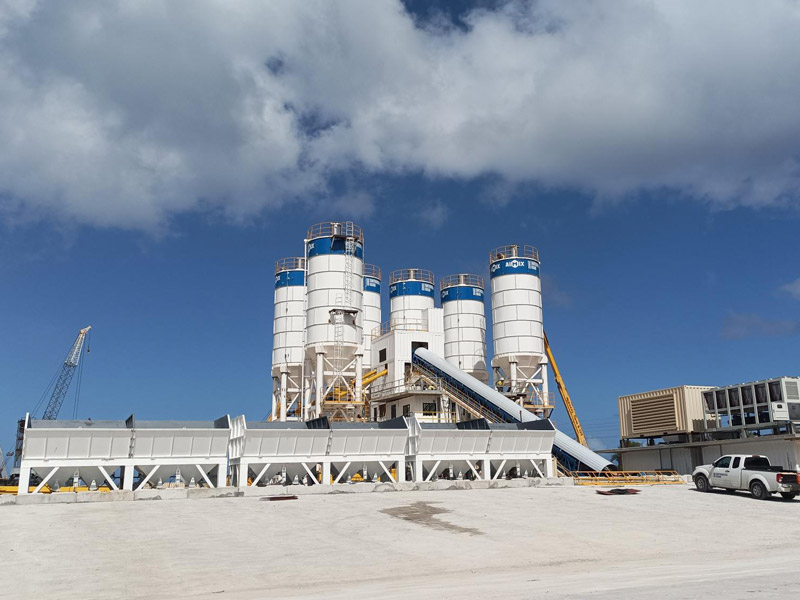
- Strategic partner of Global Fortune 500 companies, designated supplier for government projects worldwide
- Standard-equipped with internationally renowned mixers, core component lifespan extended by 50%
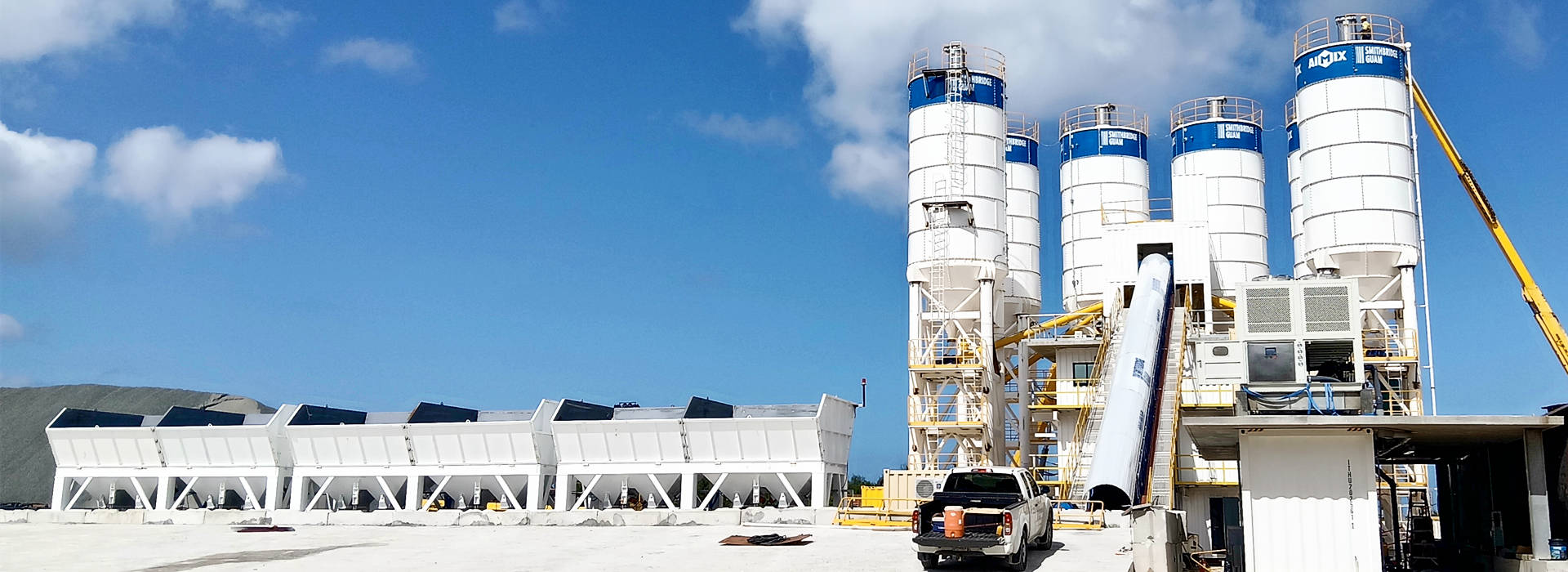
A stationary concrete batching plant is designed for long-term, large-volume concrete production, with its fixed installation feature bringing unique advantages like stable operation, high production continuity, and easy integration with peripheral equipment. Our stationary concrete batch plants, crafted with decades of industry expertise, boast robust fixed structures that ensure consistent mixing accuracy and low maintenance costs, perfectly suited for permanent construction sites. Next, we’ll detail the classifications of stationary concrete mixing plants and their applicable scenarios, helping you clarify which type fits your project needs.
- Custom Smart Solutions for Stationary Batching Plants
- Stable, Efficient & Mass Production Guaranteed
- Intelligent Control, Continuous Stable Output
Which Type of Stationary Concrete Batching Plant Fits Your Project? Classifications & Scenario-Specific Choices
Choosing the right stationary concrete batch plant for sale relies on grasping two core classifications. Below are more details of each type to help you quickly match your project needs:
Choose Based on Construction Distance: Wet Mix vs. Dry Mix
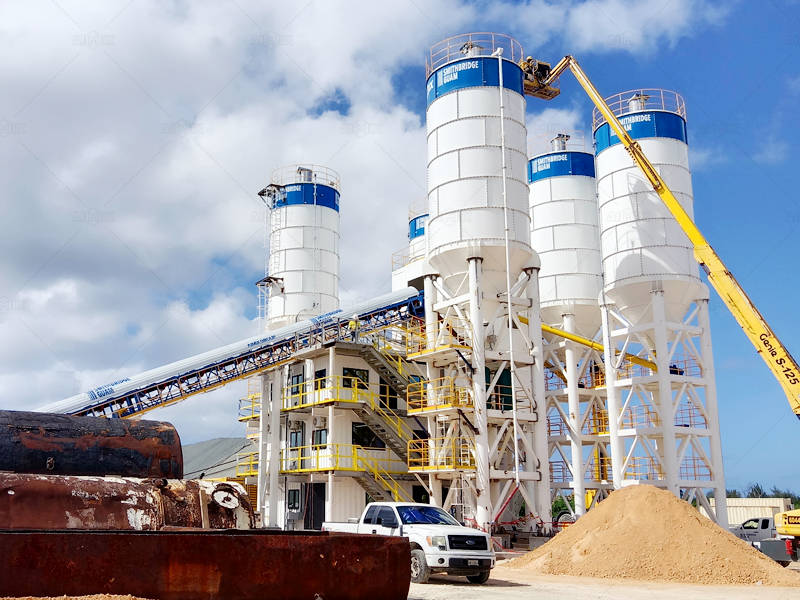
Wet Mix Type: Produce Ready-to-Use Concrete
- Key features: On-site mixing of all materials (aggregates, cement, water, additives) into ready-to-use concrete; uniform blending, high strength, stable quality; recommended transport time within 90 minutes (about 30-50km) to avoid segregation and layering.
- Applicable scenarios: Projects with strict concrete grade requirements (high-rise buildings, bridges, precast component production); ideal for short-distance construction sites (within 30-50km) where timely pouring is available.
- Why choose: Avoids uneven secondary mixing on-site; reduces construction delays and quality risks; meets national building code standards for load-bearing structures; short-distance transportation ensures no aggregate settlement or slurry separation, which would weaken concrete strength and durability.
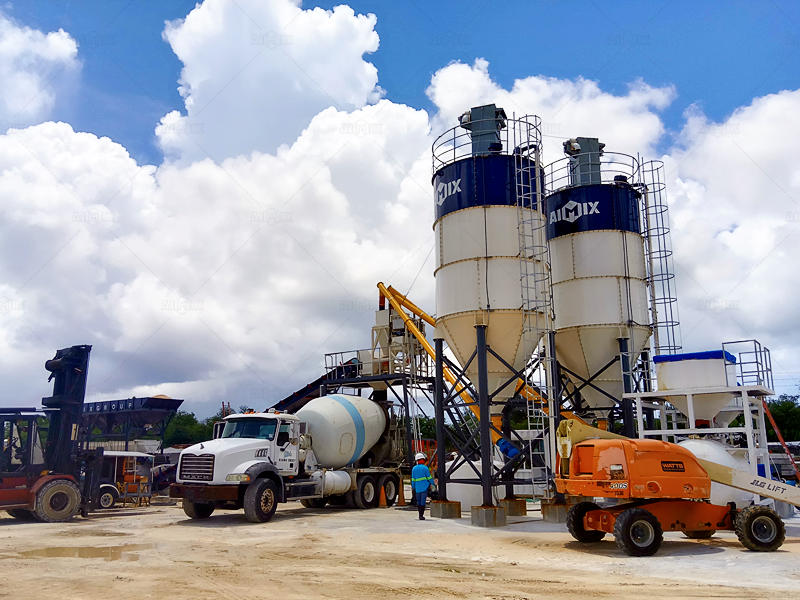
Dry Mix Type: Mix Without Water
- Key features: Mixes dry materials (aggregates, cement, additives) first in precise proportions, then adds water for final mixing at the construction site; boasts high flexibility in slump adjustment, strong adaptability to different aggregate types, and simple mixing system maintenance compared to wet mix models. Reduced soil pollution from concrete.
- Applicable scenarios: Ideal for long-distance concrete transportation (over 50km) where wet mix concrete is prone to segregation; suitable for road construction, rural housing projects, small-scale infrastructure, and remote construction sites.
- Why choose: Allows flexible adjustment of concrete slump according to on-site pouring needs, avoiding quality issues caused by fixed slump in long-distance transportation; effectively reduces water storage pressure at the concrete batching site, eliminating the need for large-scale water storage facilities and lowering water supply and storage cost; highly cost-effective for scattered construction sites or temporary project clusters.
Choose According to the Site Space: Belt Conveyor Type vs. Hopper Type
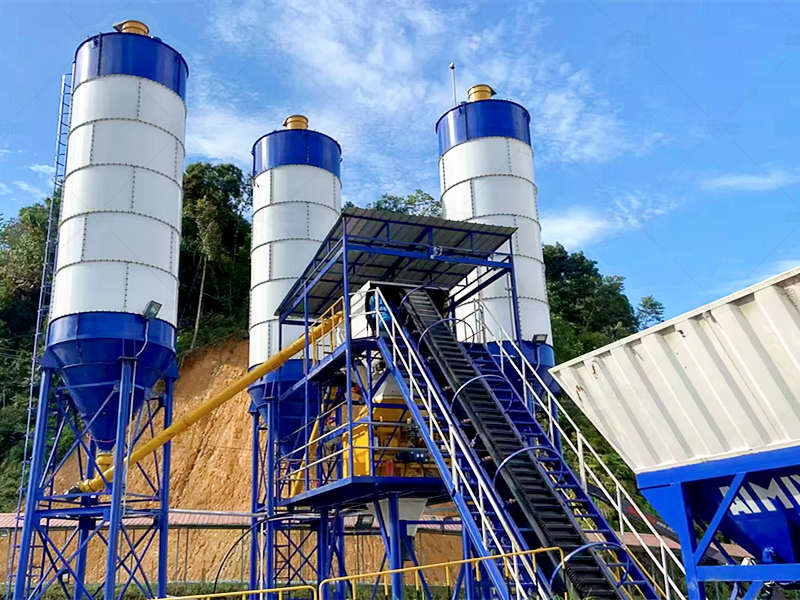
Belt Conveyor Type: Large Site Space
- Working principle: Aggregates are continuously transported to the mixer via belt conveyors; matching with accurate weighing systems, cement and additives are weighed and fed into the mixer in sequence to complete batching.
- Features: Stable & efficient (for example: 800mm width belt conveys 450-650 t/h aggregates, 1000mm width up to 1000 t/h); continuous operation; batching accuracy up to ±2%; low noise and wear.
- Applicable scenarios: Large-scale projects (60-270 m³/h output, daily output >500 cubic meters); long-distance on-site aggregate transportation (>10 meters); commercial concrete mixing stations, dams, industrial parks.
- Why choose: Ensures continuous large-scale production; high batching accuracy meets high-grade concrete needs; low maintenance time/costs; adapts to high-capacity demands.
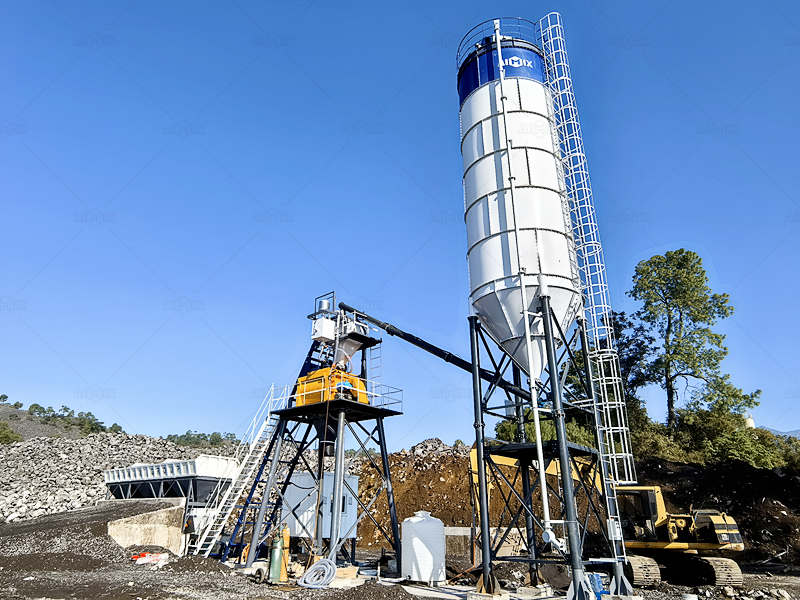
Hopper Type: Limited Site Place
- Working principle: After ingredients are weighed, aggregates are conveyed to the lifting hopper, which is pulled up along the track by steel wire ropes. When it reaches the mixer, the hopper door opens to unload materials; cement and additives are weighed separately and then sent to the mixer.
- Features: Small footprint (for example: 50 m³/h model needs only 6.2m batching space, saving ~30m space vs belt type); 7.5m feed height, 60° bucket angle; forging track wheels (30% higher strength than cast ones); compact structure, easy installation.
- Applicable scenarios: Projects with limited site space (urban renovation, indoor precast workshops); small-scale construction (25-75 m³/h output); short construction cycles.
- Why choose: Fits dense urban/narrow sites; cost-saving on space occupation; durable track wheels reduce maintenance; quick to put into use.
After understanding these main types, the specific parameters of different models are provided below for your reference and selection.
AJ Model Stationary Batching Plants Specifications
| Type | Belt Type | |||||
|---|---|---|---|---|---|---|
| Model | AJ60 | AJ90 | AJ120 | AJ180 | AJ240 | AJ270 |
| Theoretical productivity (m³/h) | 60 | 90 | 120 | 180 | 240 | 270 |
| Mixer discharge volume (L) | 1000 | 1500 | 2000 | 3000 | 4000 | 4500 |
| Mixer feeding volume (L) | 1500 | 2250 | 3000 | 4500 | 6000 | 6750 |
| Mixer power (kw) | 18.5×2 | 30×2 | 37×2 | 55×2 | 75×2 | 75×2 |
| Discharge height (m) | 4.1 | 4.1 | 4.2 | 4.2 | 4.2 | 4.2 |
| Aggregate bin configuration (number × single bin volume, m³) | 4×7 | 4×15 | 4×20 | 4×25 | 4×30 | 4×30 |
| Cycle time (s) | 60 | 60 | 60 | 60 | 60 | 60 |
| Maximum aggregate particle size (mm) | 80/100 | 80/100 | 80/100 | 80/100 | 80/100 | 80/100 |
| Cement silo (optional) | 2×100 | 3×100 | 4×100 | 4×100 | 4×100 | 4×100 |
| Aggregate weighing system | ±2% | ±2% | ±2% | ±2% | ±2% | ±2% |
| Powder weighing system | ±1% | ±1% | ±1% | ±1% | ±1% | ±1% |
| Water weighing system | ±1% | ±1% | ±1% | ±1% | ±1% | ±1% |
| Additive weighing system | ±1% | ±1% | ±1% | ±1% | ±1% | ±1% |
| Installed power (kw) | ≈110 | ≈160 | ≈220 | ≈290 | ≈340 | ≈340 |
| Control mode | Fully automated computer (PC) control | |||||
| Power supply | 220V/415V/440V/380V, 50Hz/60Hz, three-phase | |||||
| Types | Hopper type | |||
|---|---|---|---|---|
| Model | AJ-25 | AJ-35 | AJ-50 | AJ-75 |
| Theoretical Productivity (m³/h) | 25 | 35 | 50 | 75 |
| Mixer Model (Mixer Output L) | JS500 | JS750 | JS1000 | JS1500 |
| Mixer Power (kW) | 18.5 | 30 | 2×18.5 | 2×30 |
| Mixing Cycle Period (s) | 72 | 72 | 72 | 72 |
| Max.Aggregate Size (mm) | Φ60 | Φ60 | Φ60 | Φ80 |
| Standard Aggregate Bin Capacity (m³) | 3×3 | 3×5 | 3×8 | 3×12 |
| Kind of Aggregate | 2/3 | 2/3/4 | 3/4 | 3/4 |
| Max. Discharging Height (m) | 3.8 | 4.1 | 4.1 | 4.1 |
| Overall Weight (ton) | ≈15 | ≈18 | ≈23 | ≈30 |
| Installation Power (kW) | ≈65 | ≈75 | ≈100 | ≈140 |
| Power Supply | 380V/220V/415/440V, 50/60HZ, 3Phase | |||
Designed for Different Projects, Built for Long-Term Production Possibilities
For long-term concrete production projects, stationary concrete mixing plants offer stable production capacity and a reliable, continuous supply. However, as project types evolve, equipment requirements are becoming increasingly specialized.
Some projects prioritize rapid setup to shorten the investment payback period, while others focus on minimizing equipment investment and streamlining construction workflows.
To address these diverse production models and construction needs, AIMIX has introduced the AJQ70 quick-install concrete mixing plant and the AJP40 pumping-integrated concrete mixing plant. Optimized for rapid deployment and efficient on-site operations respectively, these solutions ensure a concrete production setup that is perfectly aligned with your project requirements.
AJQ70 — 24-Hour Setup for Faster Concrete Production
If your project requires the production capacity of a stationary concrete plant but you also wish to minimize setup time and upfront investment, the AJQ70 quick-assembly concrete plant offers a more flexible solution.
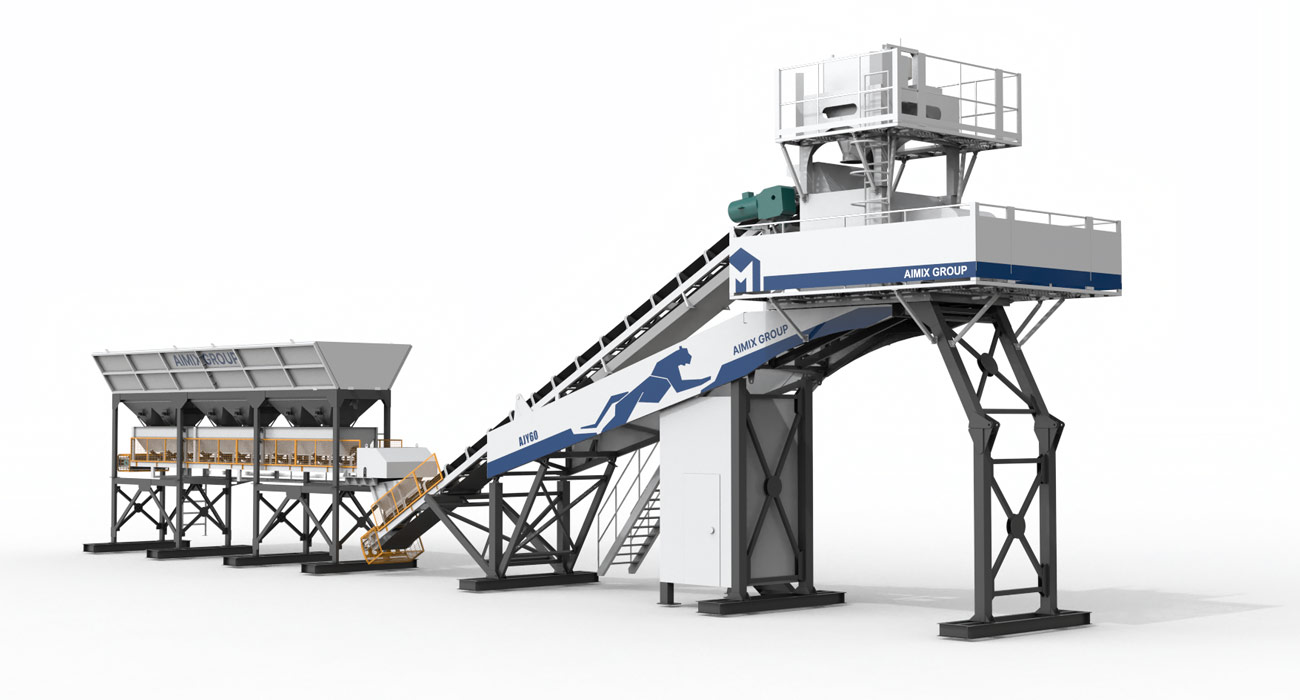
Featuring a modular, quick-assembly design, the AJQ70 ensures stable concrete production while streamlining the installation process for faster deployment. It is ideally suited for small-to-medium-sized projects, phased operations, and scenarios requiring the rapid establishment of concrete supply capabilities.
Want to launch your project quickly without wasting time on lengthy installation processes?
While traditional mixing plants typically require an installation period of two to four weeks, the AJQ70 enables you to set up the plant in approximately 24 hours, allowing the project to reach the concrete production stage much faster.
Looking for the right-sized equipment rather than paying for excess capacity you won’t use?
For those expanding their concrete supply business or seeking precise control over investment scale, the AJQ70 offers capacity that matches project requirements, ensuring a more rational and cost-effective equipment investment.
Want to start with your current project without worrying about future capacity limitations?
Furthermore, the AJQ7’s high level of standardization and broad applicability ensure strong resale value, even if you adjust your production plans in the future, giving you greater flexibility regarding your equipment investment.
Want to lower production costs and generate more profit from every cubic meter of concrete?
Want to simplify equipment operation so that even staff with no prior experience can get up to speed quickly?
AJP40 – Mix, Pump, and Build with One Complete Plant
For certain engineering projects, the challenge lies not only in ensuring stable concrete production but also in optimizing on-site transport and pouring efficiency.
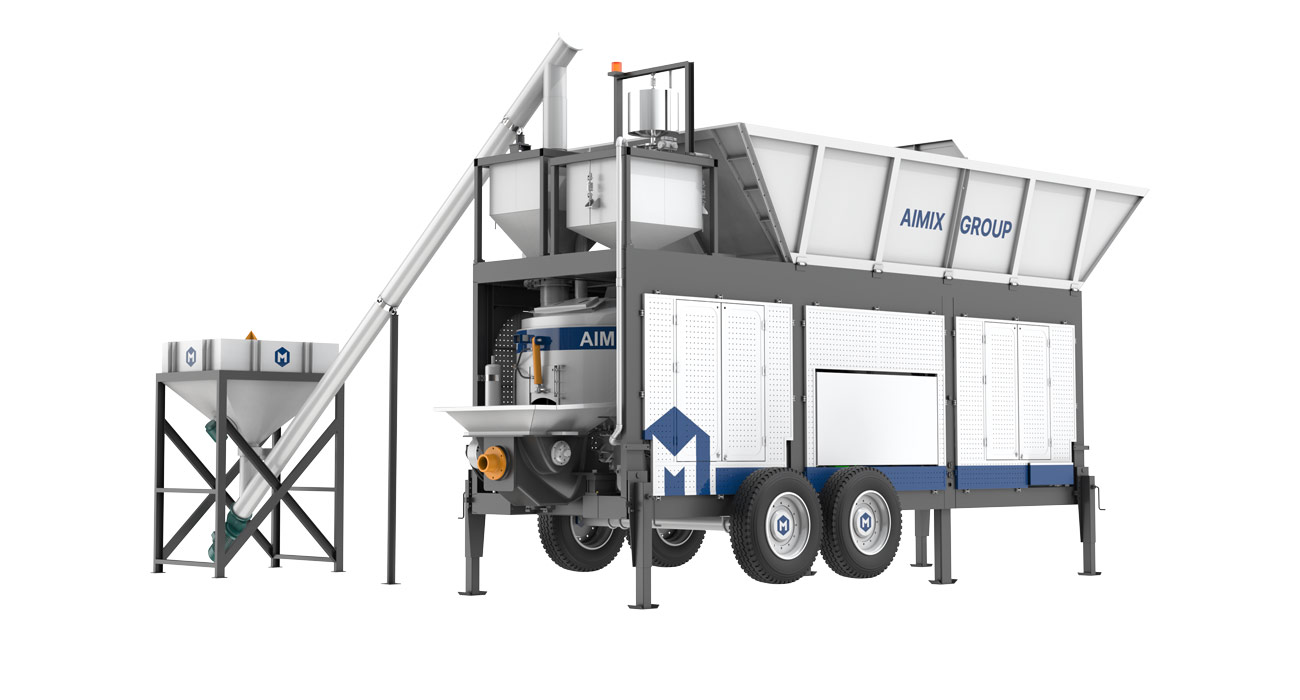
The AJP40 concrete mixing and pumping station integrates batching, mixing, and pumping functions into a single unit, creating a seamless, continuous process from production to placement. For projects with limited space, complex workflows, or requirements for rapid pouring, the AJP40 simplifies on-site operations by reducing the amount of equipment needed.
Want to reduce the number of on-site machines and simplify construction preparation?
For projects aiming to minimize equipment investment and streamline site management, the AJP40 makes preparation easier and maximizes the utility of limited resources.
Want to ensure a continuous flow of concrete from production to pouring without waiting for transfers?
For projects requiring continuous operation—such as road construction and infrastructure development—this integrated process helps maintain a smoother workflow.
Need reliable concrete supply capabilities even on space-constrained sites?
This allows you to quickly establish a concrete supply solution, even in complex construction environments.
Want a single machine that adapts to various environments rather than being limited by site conditions?
Looking to minimize manual coordination and simplify on-site construction management?
This not only reduces operational complexity but also allows the construction team to focus on project progress, thereby boosting overall construction efficiency.
- AJQ70 Quick-Install Concrete Batching Plant: Enables rapid setup and immediate production, allowing you to advance projects steadily and scale your business with optimized capacity and lower operating costs.
- AJP40 Pumping Concrete Batching Plant: Integrates batching, mixing, and pumping into a single unit, reducing equipment investment and simplifying site management while maintaining efficient, continuous operations—even in space-constrained environments.
Two models, two approaches, yet a shared goal: aligning concrete production precisely with your project’s actual needs and ensuring every investment yields tangible returns.
Whichever solution you choose, AIMIX is committed to supporting you through continuous product innovation and reliable quality assurance, helping you achieve greater stability and long-term success across projects of all types and scales.
Yield Matching Stationary Concrete Batching Plant
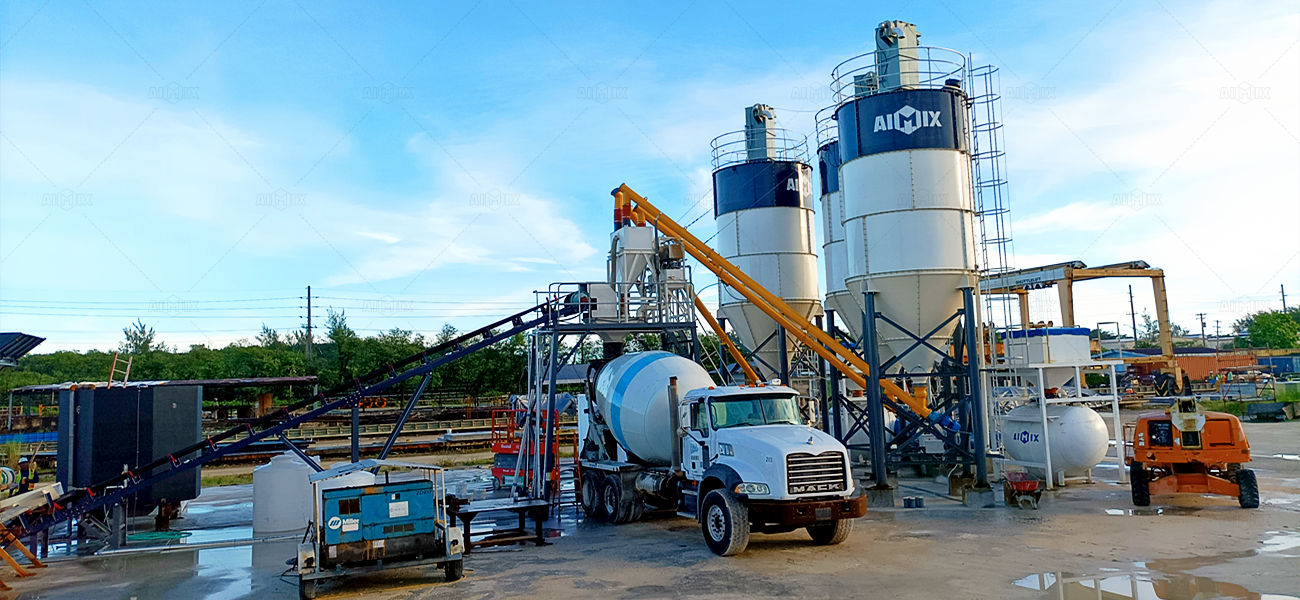
50 m³/h AJG50 Dry Mix Stationary Batching Plant
- Location: Guam
- Project: Precast concrete production
- Tailored Solution: AJG50 dry mix stationary concrete batching plant + on-site engineer supervision for installation + one-on-one operator training + long-distance after-sales support.
- Feedback: The client said that they would choose us again if they have future expansion needs.
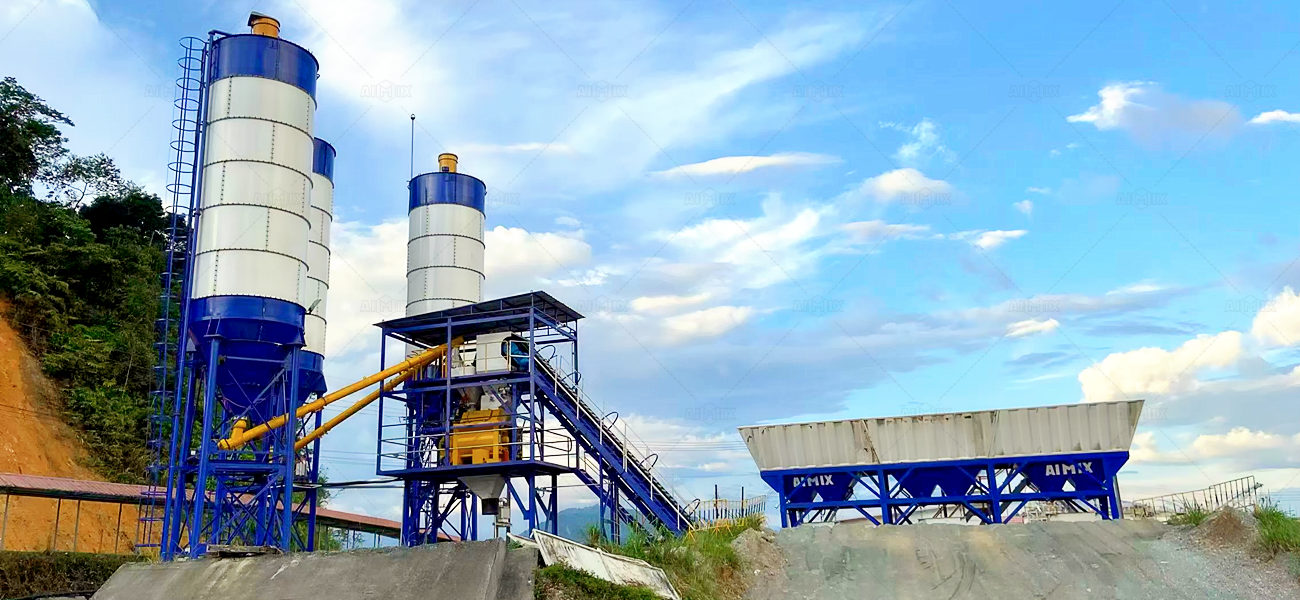
60 m³/h AJ60 Stationary Concrete Plant
- Location: Laos
- Project: Scaled-up mining operations
- Tailored Solution: AJ60 stationary concrete batch mix plant with heavy-duty components + site-specific layout optimization + full-cycle support (from pre-sales consulting to post-installation training).
- Feedback: The client recognized our professionalism and locked in a long-term trusted partnership.
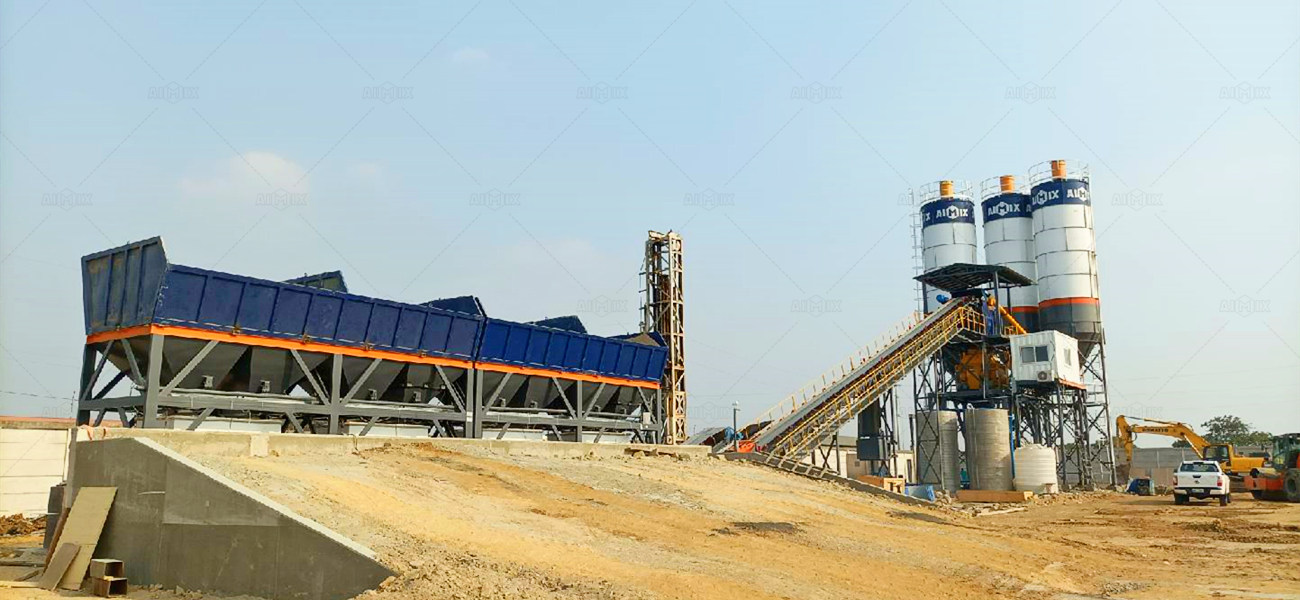
90 m³/h AJ90 Stationary Batching Plant
- Location: Ecuador
- Project: Road construction
- Tailored Solution: AJ90 stationary concrete plant with user-friendly automated control system + on-site engineer training (from basic operation to routine maintenance) + local project reference visits.
- Feedback: The customer said, “AIMIX made it so easy! We produce for our own use and sell concrete to other clients without any hassle.”
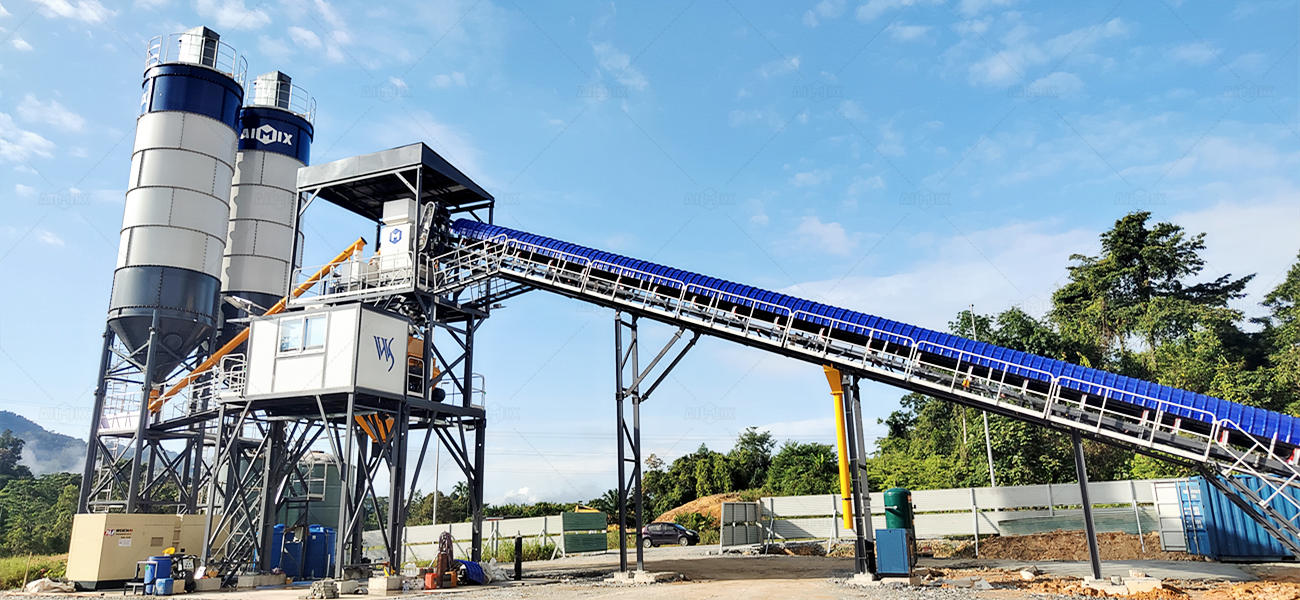
120 m³/h Stationary Concrete Plant
- Location: Malaysia
- Project: Supply concrete for crushing-related projects.
- Tailored Solution: AJ120 stationary concrete batching plant with dual-operation modes (PLC touch screen + physical buttons) + localized service from Malaysia branch (spare parts supply + on-site maintenance).
- Feedback: This is a repeat order based on previous cooperation. Deepening our partnership into a strategic collaboration.
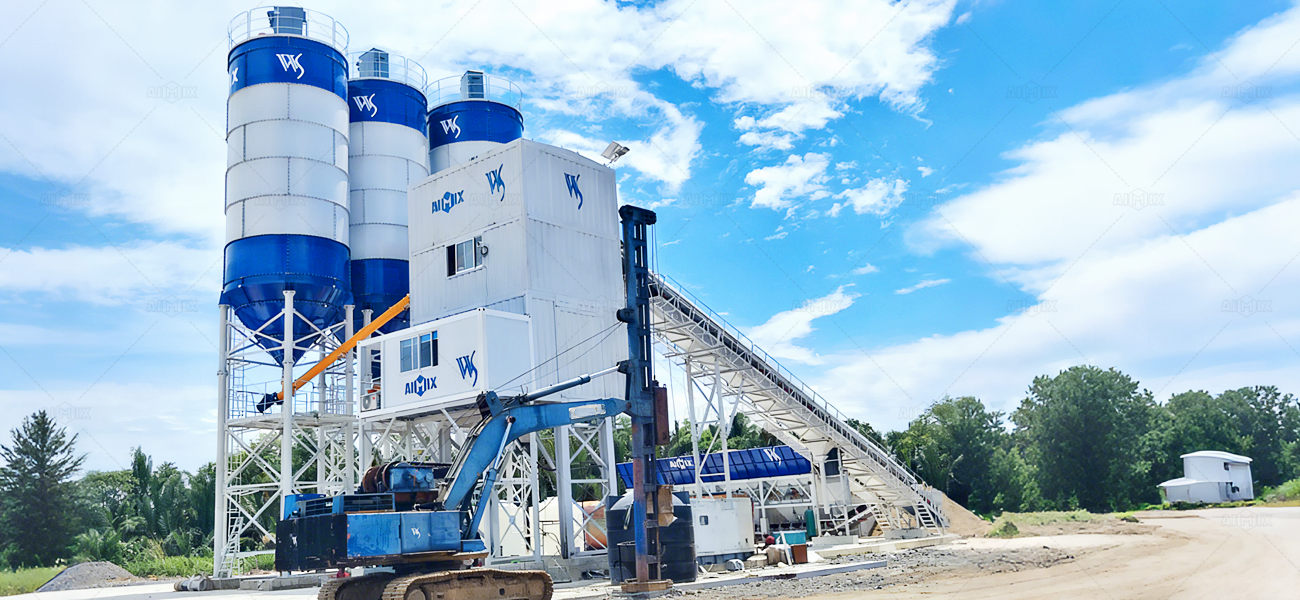
180 m³/h Stationary Batching Plant
- Location: Malaysia
- Project: Provide commercial ready-mix concrete (RMC) for infrastructure demand.
- Tailored Solution: AJ180 stationary concrete batch mix plant equipped with 3m³ SICOMA twin-shaft mixer + smart automated control system + precision feeding with remote monitoring.
- Feedback: The client can now confidently take on large contracts and has become a top RMC supplier in the region.
From small to large capacity, our stationary concrete batching plant cases have proven reliable performance in diverse projects. But the stable operation of these stationary concrete plants starts with a solid foundation—its quality directly affects equipment durability and production safety. Next, we’ll break down the foundation construction process and essential safety tips in simple terms, helping you lay a firm base for your stationary concrete batching plant.
Stationary Concrete Batching Plant Foundation: Step-by-Step Construction & Safety Essentials
Core Foundation Materials
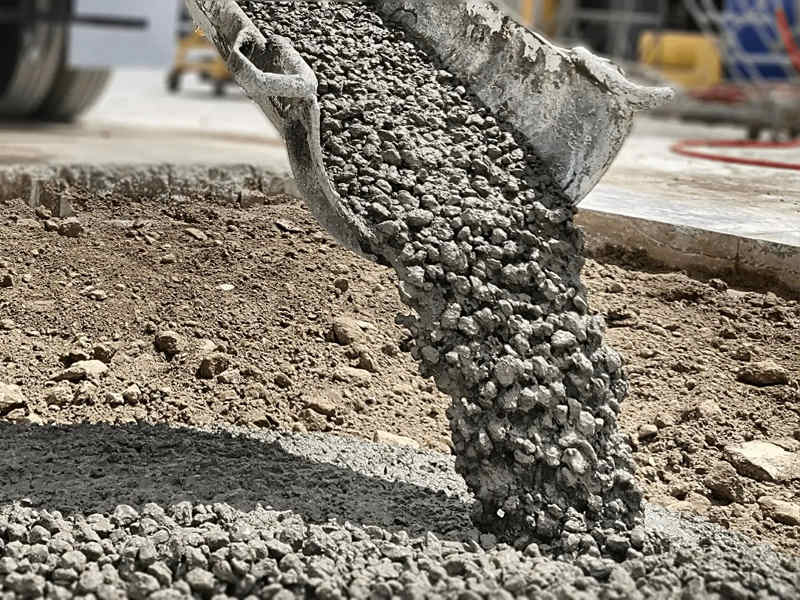
- Concrete: Choose C30 or higher grade concrete (compressive strength ≥30MPa) to bear the weight of the stationary concrete batching plant (usually 50-200 tons). It ensures the foundation won’t crack under long-term load.
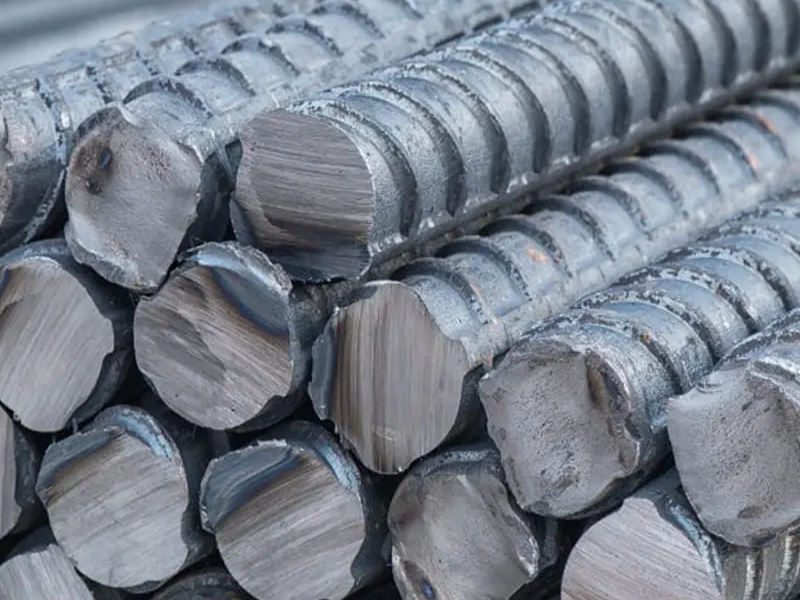
- Embedded Reinforcement: Use HRB400 grade steel bars (common specifications: Φ16-22mm) to form a reinforcement cage. The quantity and spacing are determined by the equipment’s foundation drawing to enhance structural stability.
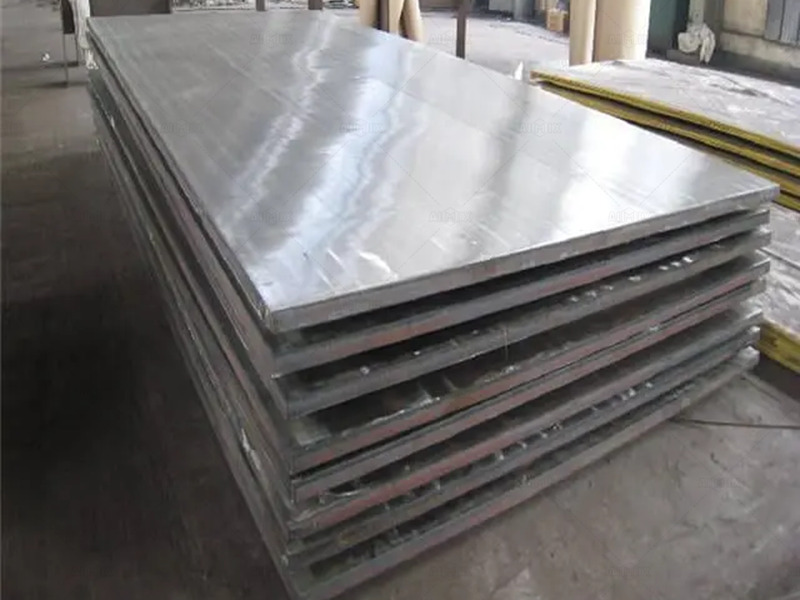
- Embedded Steel Plates: Adopt Q235B steel plates (thickness 12-20mm, size matching equipment base) with pre-drilled holes for reinforcement connection. They ensure tight integration between the plant and foundation.
Step-by-Step Foundation Construction Process
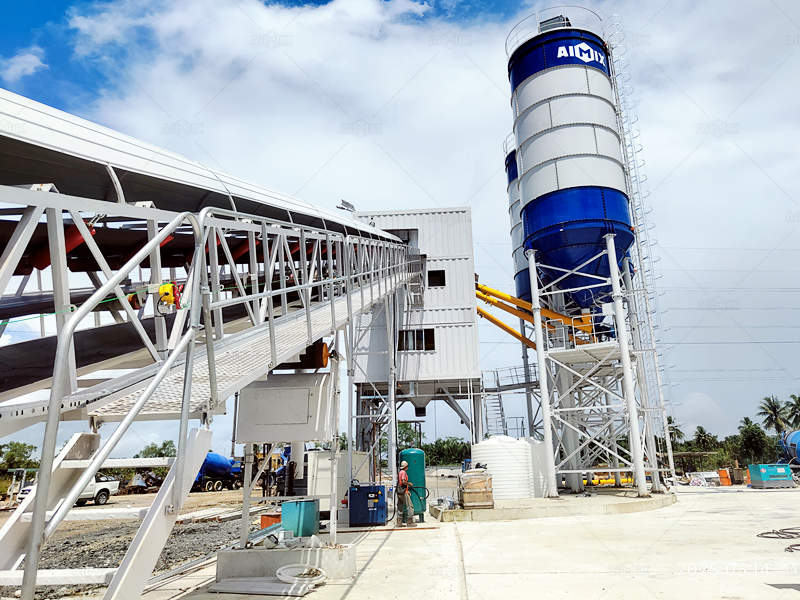
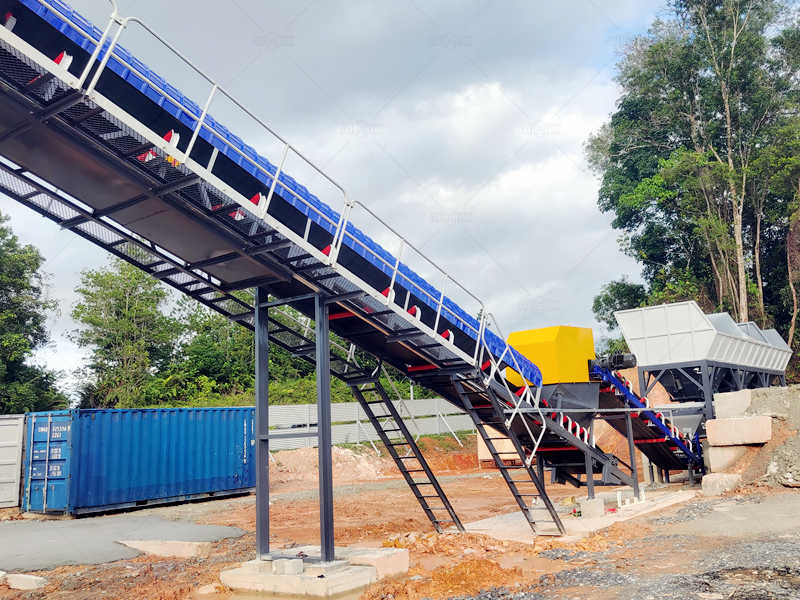
- Step 1: Mark Dimensions Accurately: According to the official foundation drawing of the stationary concrete batching plant, use ink lines and stakes to mark the foundation’s length, width, and key positions on the reserved ground. Ensure the marking error is within ±5mm.
- Step 2: Excavate the Foundation Pit: Use excavators or manual labor to dig the pit as per the marked lines. Adjust the depth based on local soil conditions (sandy soil needs 1.2-1.5m depth; cohesive soil can be 0.8-1.2m) to avoid settlement. The pit bottom should be level (error ≤3mm/m).
- Step 3: Place Reinforcement & Pour Base Concrete: Put the prefabricated reinforcement cage into the pit, ensuring it’s centered and fixed. Pour C30+ concrete evenly, and vibrate to eliminate air bubbles. Leave 10-15mm height (slightly thicker than the embedded plate) without covering the top of the reinforcement.
- Step 4: Install Embedded Plates: After the base concrete initial sets (about 24 hours), place the embedded plate on the reinforcement (aligning pre-drilled holes with reinforcement). Adjust the plate to be horizontal (use a level; error ≤2mm/m) to ensure the plant installs smoothly.
- Step 5: Weld & Finish After Curing: Once the concrete fully cures (≥28 days), weld the embedded plate firmly to the reinforcement. Clean the foundation surface, remove debris, and check for cracks—then it’s ready for stationary concrete batching plant installation.
Critical Safety Tips – Avoid Common Risks
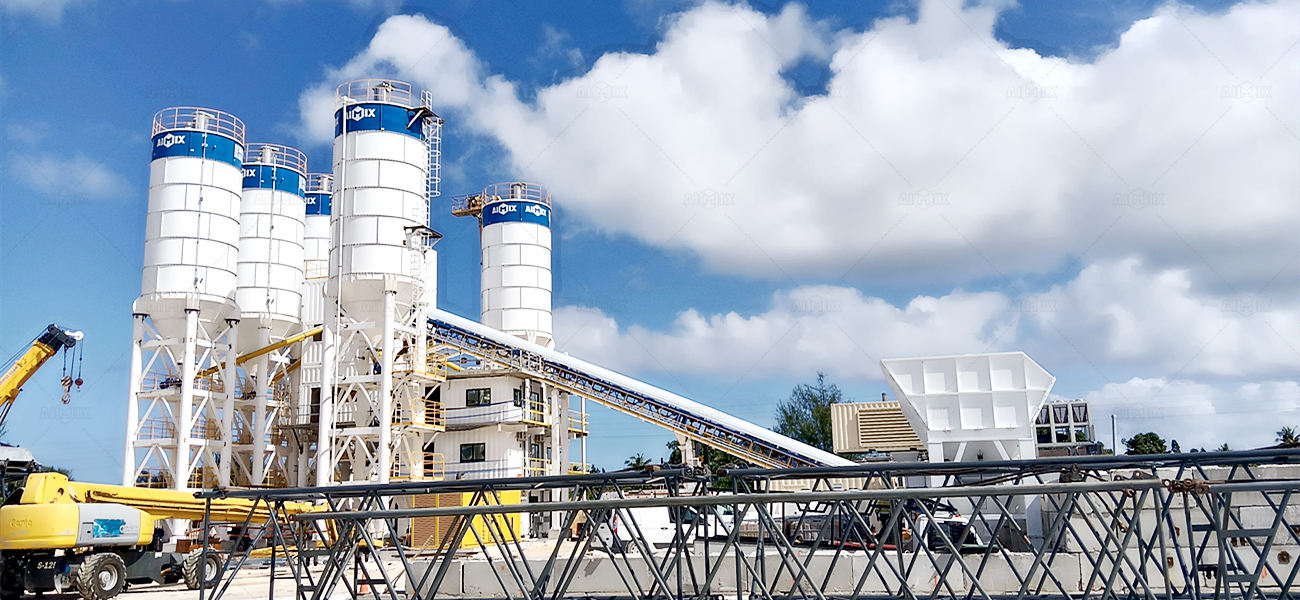
- Soil Bearing Capacity Check: Before construction, test the soil bearing capacity (must be ≥200kPa). If insufficient, add a 200-300mm thick gravel layer for compaction (compaction degree ≥95%) to prevent foundation settlement.
- Curing Can’t Be Skipped: Keep the concrete moist during curing (cover with geotextile or spray water regularly). Don’t rush to install the plant before 28 days—insufficient curing leads to weak strength and easy cracking.
- Safety Protection During Construction: Set up warning signs around the foundation pit to prevent falls. Workers must wear safety helmets; for deep pits (>1.5m), install temporary support (steel pipes or retaining plates) to avoid collapse.
- Precision Control: The embedded plate’s horizontal error must not exceed 2mm/m. If it’s tilted, the stationary concrete batching plant will vibrate during operation, shortening service life and causing safety hazards.
- Post-Construction Observation: Within 3 months after plant operation, check the foundation monthly for cracks or uneven settlement. If cracks exceed 0.3mm, stop operation immediately and repair.
A solid foundation lays the groundwork for your stationary concrete batching plant, but a smooth, efficient production line relies on well-matched supporting equipment. From raw material feeding to finished concrete delivery, every link needs equipment that works in perfect harmony with your stationary concrete batch plant. Below, we’ll walk you through the core supporting equipment in a step-by-step scenario, showing you how these tools streamline operations and maximize your project’s productivity.
Core Supporting Equipment – Feeding to On-Site Delivery
Raw Material Feeding: Wheel Loaders – The “Precision Material Transporters” for Aggregate Yards
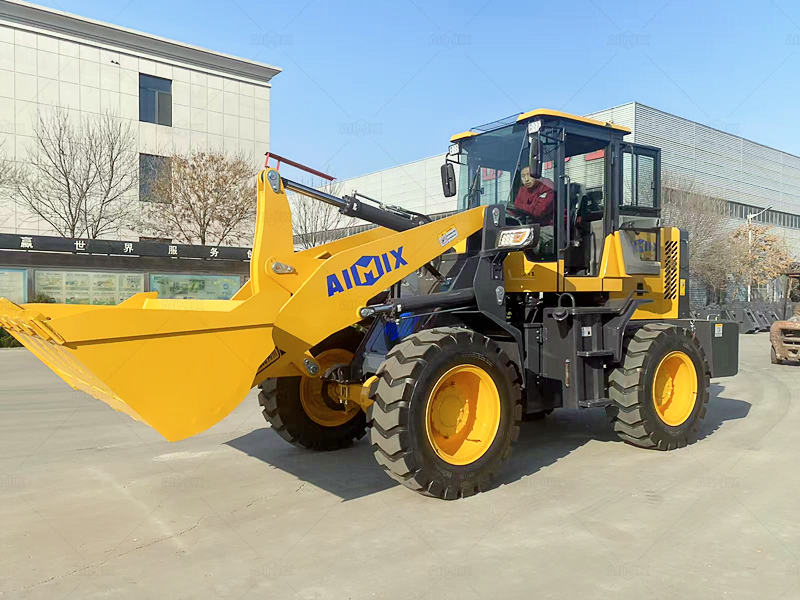
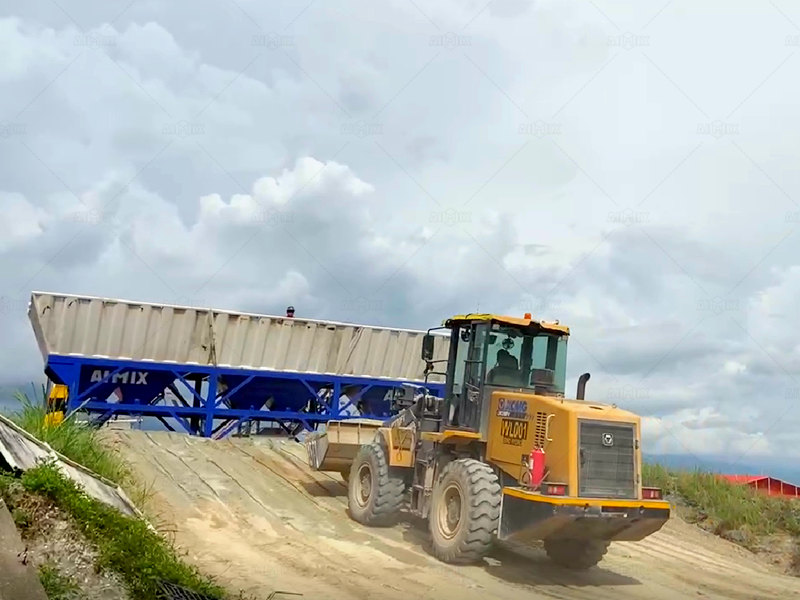
- Imagine arriving at your construction site: piles of aggregates (sand, gravel, crushed stone) are neatly stacked, and your stationary concrete mixing plant is ready to start production. To move these materials quickly from the yard to the batching plant’s aggregate bins, our purpose-built wheel loaders are the ideal match—designed to fit the feeding demands of different capacity stationary concrete batching plant for sale, with no compatibility issues.
- Practical Advantages: Every wheel loader in our lineup is pre-calibrated to match the feeding height and bin spacing of our stationary concrete batching plants. With durable bucket designs (resistant to aggregate wear) and optimized power outputs (from 41.1kW to 55kW for AZS series), they balance efficiency and fuel economy. As a one-stop supplier, we eliminate the hassle of equipment matching—you get a loader that works seamlessly with your plant, saving you time and avoiding production bottlenecks.
Finished Concrete Delivery: Concrete Mixer Trucks – The “Freshness Guardian” for On-Site Pouring
Once your stationary concrete batching plant mixes high-quality concrete, the final step is to deliver it to the pouring site quickly and in perfect condition. Our concrete mixer trucks are designed to preserve concrete integrity during transportation, bridging the gap between production and construction.
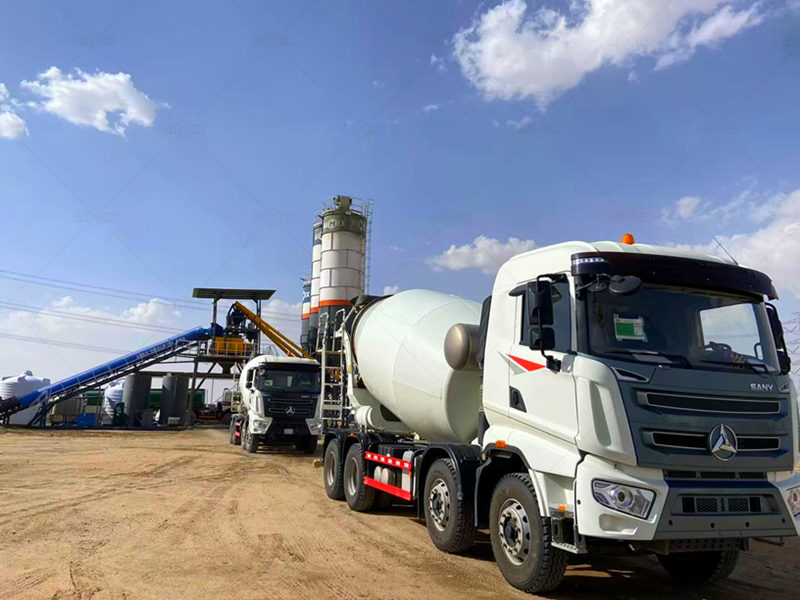
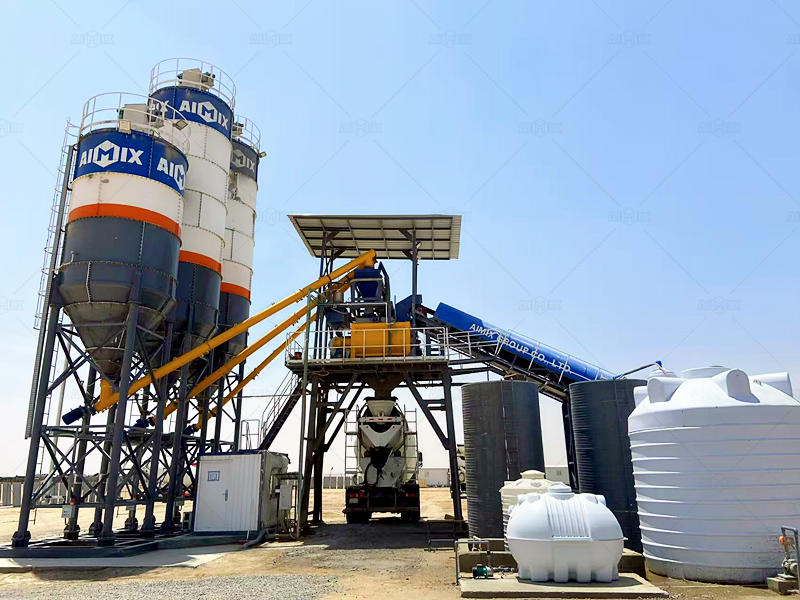
- Scene Integration: Suppose your stationary concrete batch plant is supplying wet-mix concrete for a high-rise building 20 km away—our mixer trucks keep the drum rotating continuously to prevent segregation and layering, a common risk for short-distance wet-mix transport. For longer hauls (up to 50 km, ideal for dry-mix concrete from your stationary plant), the truck’s adjustable rotation speed and on-site water-adding system let you fine-tune slump to meet pouring requirements. For large-scale projects like bridges or industrial parks, we can configure a fleet of trucks to match your plant’s output—whether it’s 50 m³/h or 180 m³/h—ensuring no delivery delays hold up your schedule.
- Practical Advantages: The mixer drum’s wear-resistant lining extends service life, while the energy-saving engine reduces long-term operating costs. As a full-line supplier, our trucks are calibrated to match the discharge speed of your stationary concrete batching plant—no more waiting for trucks to empty or slowing down production to avoid overflow. Customers often tell us this seamless integration cuts delivery time by 15%, helping them meet tight deadlines while maintaining concrete quality. Whether you’re supplying commercial ready-mix or on-site project concrete, our mixer trucks ensure your product arrives fresh and workable.
Choosing supporting equipment for your stationary concrete batching plant is just one step—investing in a stationary plant is a major project, and understanding the full-process costs is key to smart budgeting. From foundation construction to daily operation and long-term value retention, we’ll break down the costs in simple terms, helping you grasp the investment logic.
Full-Process Cost Analysis – From Setup to Long-Term Operation
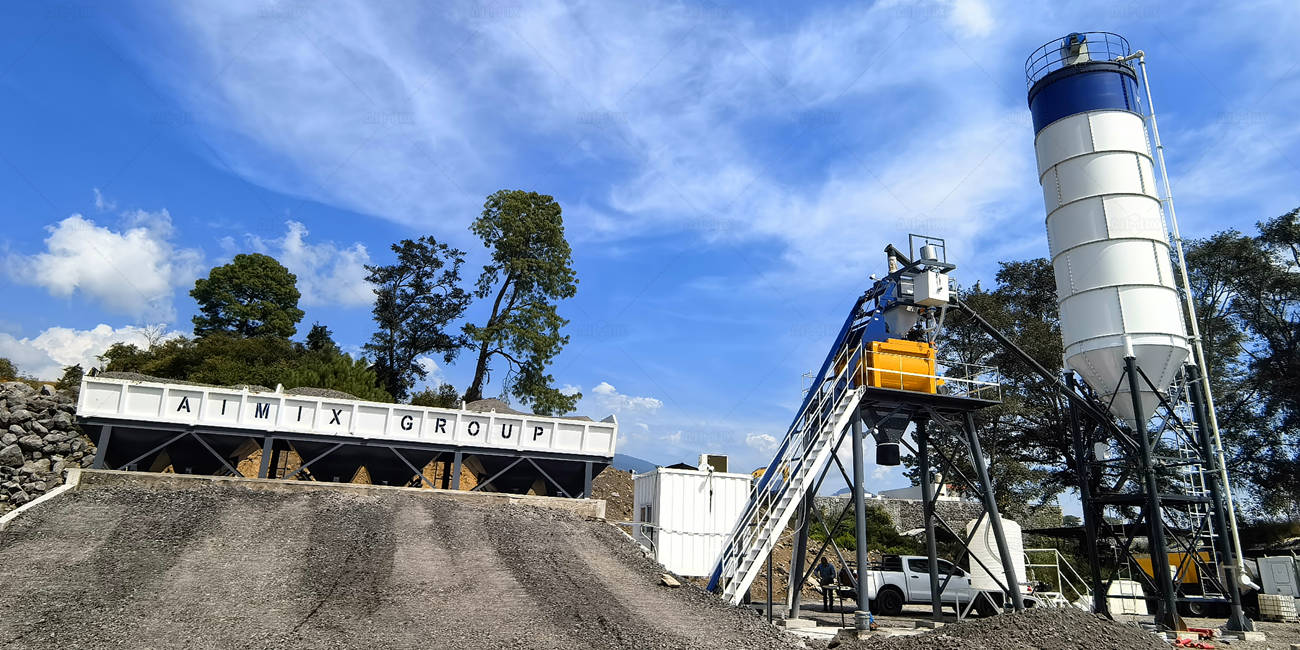
Foundation Construction Cost: The “Stable Base” Investment
Foundation cost is the initial fixed expense, and its amount depends on multiple practical factors, no two projects are exactly the same.
- Core Influencing Factors: Soil bearing capacity (sandy soil may need gravel reinforcement, increasing cost; cohesive soil is more cost-effective), plant capacity (larger capacity requires larger foundation area and thicker concrete), and local material/labor prices (C30+ concrete, HRB400 steel bars, and embedded plates are standard materials, with prices varying by region).
- Cost-Saving Logic: Our professional team provides customized foundation drawings based on your site’s soil test report, optimizing the design to avoid over-engineering. This ensures structural stability while reducing unnecessary material and labor costs.
Stationary Concrete Batching Plant Price: Customized Based on Your Needs
The plant itself is the largest part of the initial investment, and there’s no fixed price—it’s fully tailored to your project requirements.
- Key Pricing Drivers: Production capacity (50 m³/h small-scale to 180 m³/h large-scale), configuration level (automation degree, mixing host type, environmental protection equipment like dust removal systems), and customized demands (matching your existing supporting equipment, local environmental regulations, or special project needs).
- Our Advantage: We don’t offer one-size-fits-all prices. Instead, we evaluate your project scale, daily output needs, and budget constraints to design a cost-effective solution. Whether you need a basic model for small rural projects or a high-automation plant for commercial RMC supply, we’ll quote based on your actual situation—just reach out for a personalized consultation.
Daily Operation Cost: Ongoing Expenses That Affect Profitability
Daily costs are recurring expenditures, and rational control directly improves your profit margin. They mainly include four parts:
- Raw Material Cost: The largest share (accounting for over 60% of total daily cost), including cement, aggregates, admixtures, and water. It varies with concrete strength grade (higher-grade concrete uses more cement and high-quality admixtures) and local raw material prices.
- Energy Cost: Covers electricity (for mixers, conveyors, and control systems) and fuel (for wheel loaders and mixer trucks). Our equipment is optimized for energy efficiency—high automation reduces idle power consumption, and the matched wheel loaders balance power and fuel economy.
- Labor Cost: Depends on the plant’s automation level. Our PLC intelligent control system allows one operator to manage the whole production line, reducing the number of workers needed compared to semi-automatic plants. For large-scale plants, we also optimize the workflow to minimize labor input.
- Maintenance & Consumable Cost: Regular maintenance (lubrication, part inspections) and replacement of wear parts (bucket liners, conveyor belts). Following our provided maintenance manual can extend part service life and reduce unexpected repair costs.
Equipment Residual Value Rate: Protecting Your Long-Term Investment
Residual value reflects the long-term value of your equipment, and it’s closely related to product quality and usage habits.
- Industry Basic Logic: A well-maintained stationary concrete batching plant has a service life of 10-15 years. The residual value rate is mainly affected by three factors: equipment quality (durable components retain value better), maintenance quality (regular maintenance prevents major failures and preserves performance), and brand recognition (reliable brands are more sought-after in the secondary market).
- Our Value Guarantee: Our plants use heavy-duty components and standardized production processes, with a higher residual value rate than ordinary products. Coupled with our professional maintenance guidance and global spare parts supply, your equipment will retain good performance and market value even after years of use—turning initial investment into long-term assets.
Whether you’re calculating initial budget or evaluating long-term profitability, we can provide a detailed cost estimate based on your specific project.
Understanding the full-process costs helps you budget wisely, and partnering with a supplier that offers customized services tailored to your stationary concrete batching plant project will eliminate worries from start to finish. We focus on your unique needs for fixed-site production, not one-size-fits-all solutions that lack targeted support for stationary plants.
Cooperate with Us: Customized Services for Your Stationary Concrete Batching Plant – Worry-Free from Selection to Long-Term Fixed-Site Operation
Customized Equipment Configurations: Fit Your Production Needs Exactly
- Integrated Control System: Tailored for stationary concrete batching plants’ long-term continuous operation – one-click start/stop + dual-operation mode (PLC touch screen + physical buttons) adapts to different operators, cutting startup time by 30%+, reducing errors by 50%, and ensuring stable production for fixed-site projects.
- IOT Remote Monitoring System: Exclusive to large stationary plant equipment – real-time monitoring of key parameters (motor temperature, vibration, etc.) with automatic alarms. Lowers stationary plant failure rate by 40%, saves 25% maintenance cost, extends your stationary batching plant’s service life by 15%+, and provides predictive maintenance for long-term fixed operation.
- Precision Feeding System: Optimized for stationary plants’ large-scale batching needs – supports remote speed/ratio adjustment, material surplus alerts and automatic refueling. Improves stationary plant production continuity by 20% and reduces raw material waste for fixed-site mass production.
Aimix Full-Cycle Services: Worry-Free at Every Step
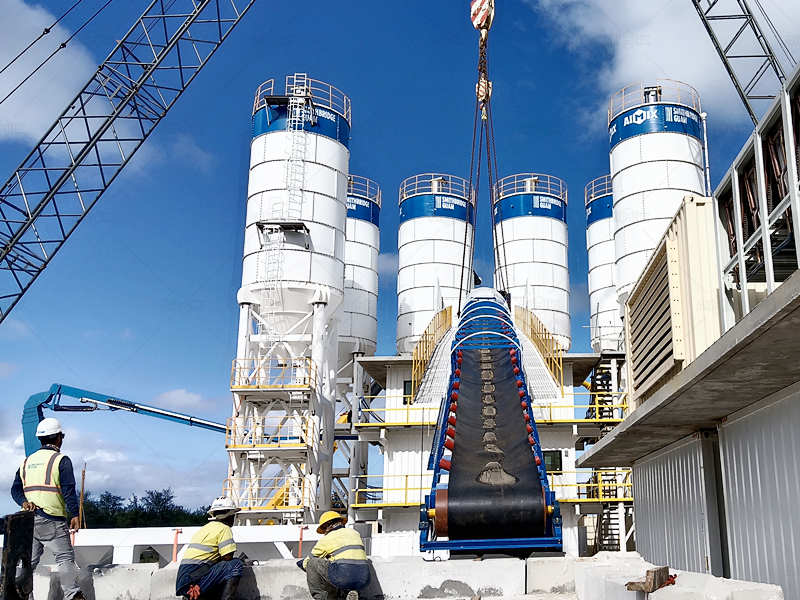
- Pre-Sales: Professional one-on-one consultation for stationary concrete batching plants – 2-3 customized solutions (with foundation drawings, equipment parameters, 3D models) within 2 hours, matching your fixed-site scale and yield needs.
- In-Sales: Full-process supervision for stationary plant production, timely configuration adjustment for fixed-site requirements, same-day payment & immediate shipment, free toolbox and accessories for stationary plant installation/commissioning.
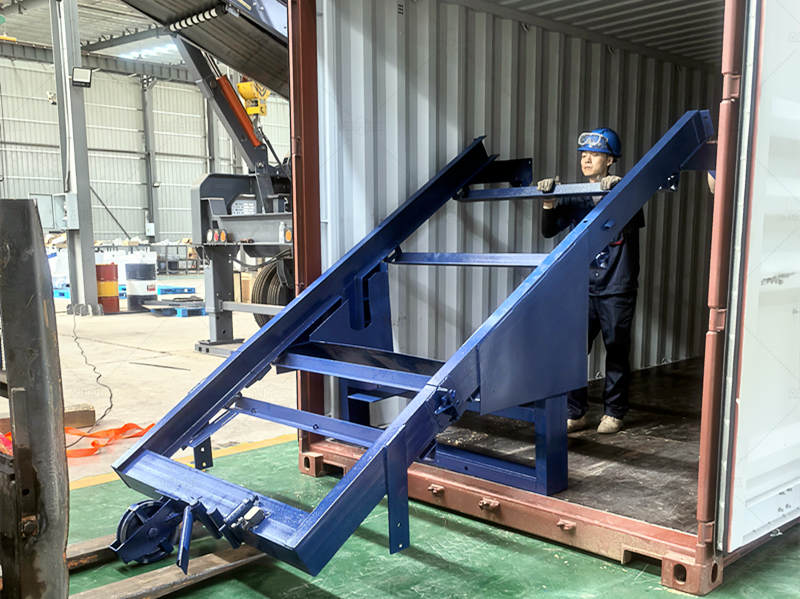
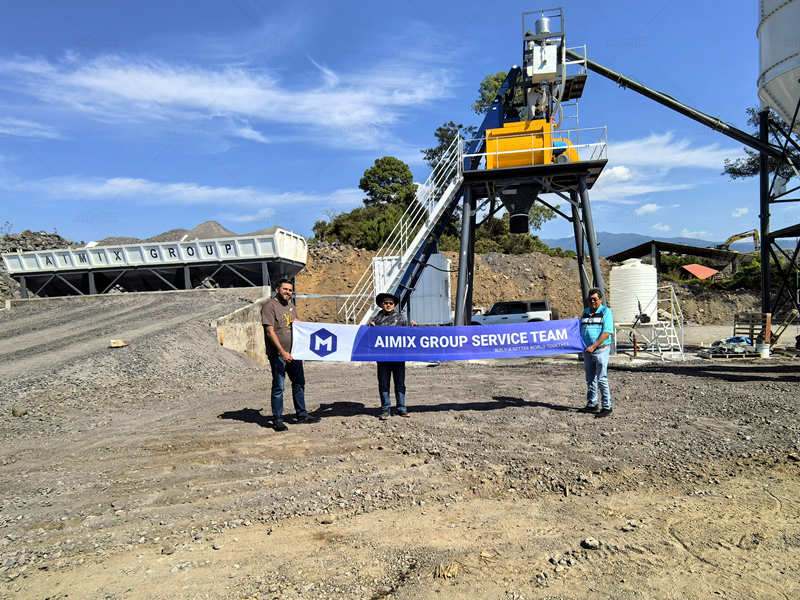
- After-Sales: Local support for stationary plant on-site service – one-stop solutions (transportation, customs clearance, stationary plant installation, operator training), turnkey service available for hassle-free fixed-site project launch.
From choosing the right type of stationary concrete batching plant to laying its foundation, matching supporting equipment for fixed-site use, controlling long-term operation costs, and enjoying exclusive customized services, we’ve got you covered at every step of your stationary plant project. As a trusted manufacturer exporting to over 100 countries, we’re committed to providing reliable stationary concrete batching plant equipment and targeted services for your fixed-site concrete production business. If you’re interested in our stationary concrete batch plant or need a personalized solution for your fixed-site project, contact us now—we’ll help you start your project smoothly!