
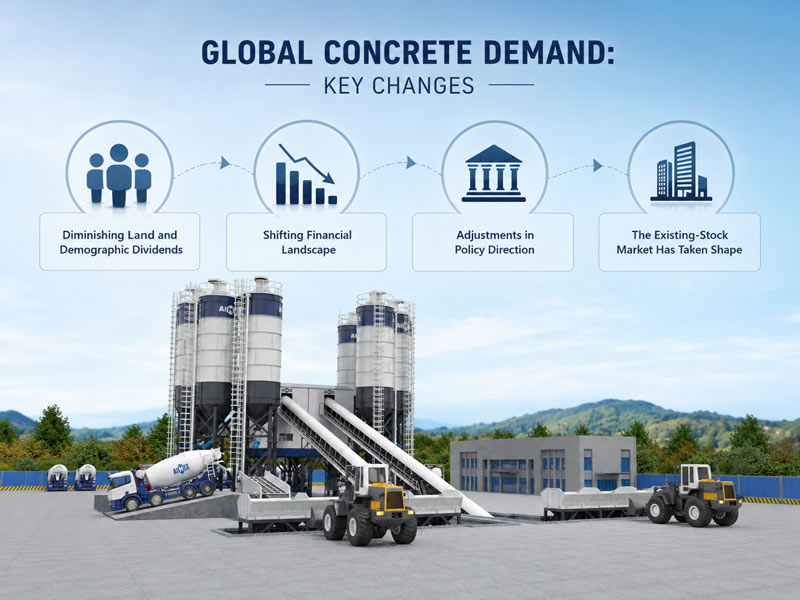
If you have been observing the global concrete industry over the past few years, you may have noticed a distinct phenomenon: while the real estate market is cooling down, the hum of concrete mixing plants on construction sites has not ceased.
In reality, the structural landscape of global concrete demand is undergoing a quiet transformation. The growth paradigm—once dominated by the real estate sector—is now being supplanted by new driving forces. This is not an isolated anomaly specific to a single nation, but rather a widespread, cross-regional trend. From industrial parks in Southeast Asia to cross-border transport corridors in Africa, and from new city developments in the Middle East to the renovation of aging urban utility networks in Europe, the flow of concrete is being fundamentally redirected.
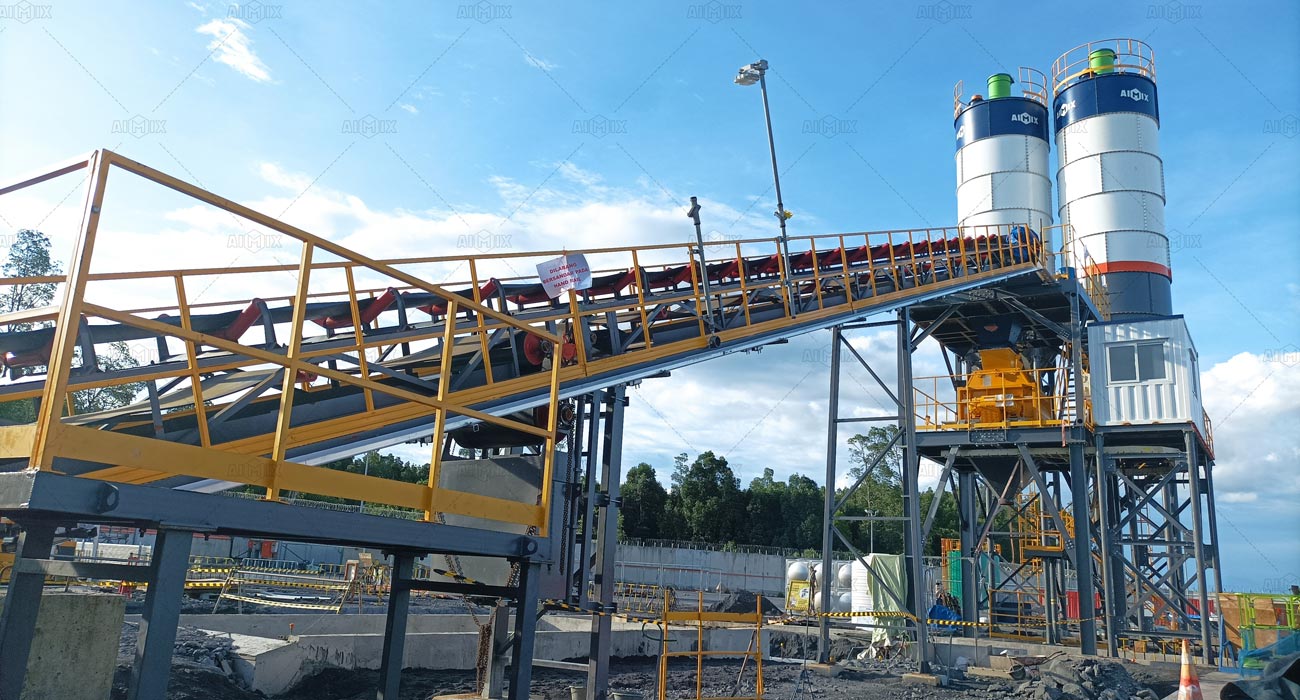
For professionals within the industry, what exactly does this shift signify? It means that opportunities are shifting away from their traditional trajectories, gravitating instead toward those who were quickest to recognize this new direction. Below, let us examine the origins and implications of this structural realignment, and explore how it is poised to shape the future of the concrete mixing plant industry.
What kind of changes is global concrete demand experiencing?
Over the past decade or so, the real estate sector has served as the most stable engine driving the demand for concrete. However, the RPM of this engine is now slowing down—not due to mere transient fluctuations, but because several deep-seated, long-term forces are simultaneously at work. The demographic and land-related dividends are gradually peaking, financial conditions are no longer accommodative, policy direction has undergone a deliberate shift, and the market itself has entered a phase characterized by existing stock rather than new growth.
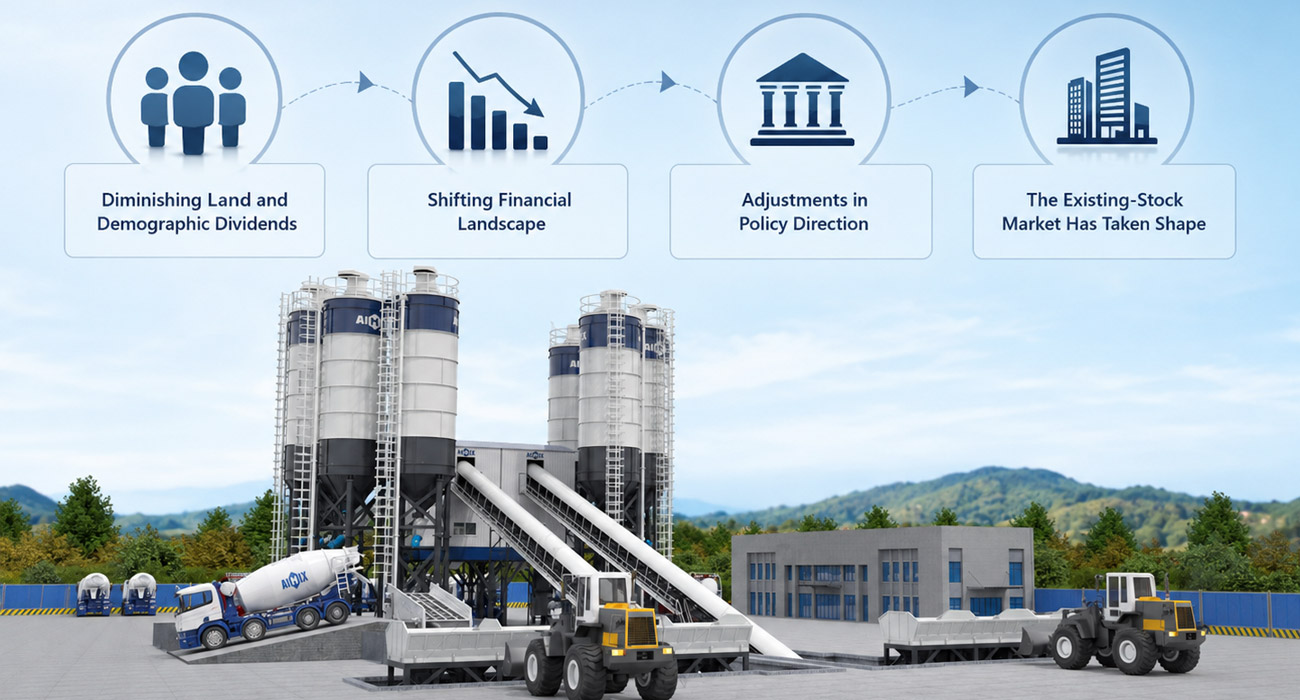
Diminishing Land and Demographic Dividends
- Land supply for residential development is contracting: Development boundaries have been demarcated in most cities, and quotas for new construction land are being tightened annually. This reduction in land supply directly limits the number of new residential projects launched, thereby curbing the demand for concrete in the residential sector.
- Urban population growth is slowing; the base of potential homebuyers is no longer expanding: With the exception of a few regions, global population growth rates are generally declining. As the demographic pool of potential homebuyers shrinks, the room for incremental growth in residential concrete demand naturally narrows.
- An aging society requires supporting infrastructure rather than commercial housing: The demand driven by a rising elderly population centers on senior care facilities, community healthcare centers, and age-friendly retrofits—not traditional residential housing. The shift in concrete consumption from building homes to constructing supporting infrastructure is a direct reflection of demographic structural changes on the demand side.
Shifting Financial Landscape
- Rising financing costs are stifling new real estate starts: Over the past few years, interest rates across major global economies have generally risen, while credit policies have been specifically tightened for the real estate sector.
- Capital is gravitating toward infrastructure and municipal projects: Government-issued special bonds, loans from international development institutions, and Public-Private Partnership (PPP) models are all prioritizing support for sectors such as transportation, water conservancy, and urban renewal.
- Developers themselves are scaling back residential investments: The high-turnover, high-leverage business model is becoming unsustainable; consequently, developers are increasingly inclined to limit the floor area of new residential starts, opting instead to invest in sectors with more stable returns—such as industrial real estate, logistics, and warehousing.
Adjustments in Policy Direction
- Major global economies are ramping up infrastructure investments: Initiatives such as the U.S. IIJA, the EU’s Global Gateway, Southeast Asia’s transportation corridors, and Africa’s trans-regional road networks are characterized by substantial funding, long implementation cycles, and a rigid demand for concrete. The deliberate policy shift—redirecting resources from real estate toward infrastructure—stands as the most definitive driving force behind the restructuring of demand.
- Real estate regulatory policies are tightening simultaneously across multiple markets: Global real estate policies are increasingly aimed at curbing speculative activity within residential markets. Developers face growing difficulties in securing land approvals and planning permits, resulting in a decline in the number of new construction starts.
- Municipal and industrial projects are receiving greater policy support: Projects involving the renovation of aging residential communities, the construction of underground utility corridors, wastewater treatment plants, and industrial park upgrades are frequently placed on priority lists, benefiting from expedited approval processes and increased subsidies.
The Existing-Stock Market Has Taken Shape
- New Construction Slows, Yet Demand for Repair and Renovation Continues to Grow: In highly urbanized regions, the volume of new residential construction is increasingly being supplanted by the repair and replacement of existing structures. Demand has shifted from an explosive, rapid-growth phase to a steady-state phase.
- Existing-Stock Projects Require More Flexible Concrete Supply: Repair and structural reinforcement projects often necessitate fast-setting, early-strength, or specialized concrete—rather than the bulk supply of standard-grade mixes. Consequently, the product portfolio of concrete batching plants must evolve from a monolithic structure to a diversified one, transitioning from mass production to flexible, customized delivery.
- The Existing-Stock Market Extends Demand Cycles, Favoring Long-Term Business Operations: A single renovation or retrofit project involving existing structures can span 5 to 10 years, whereas a new construction project typically lasts only 1 to 2 years. As a result, concrete batching plants no longer need to constantly chase after new development sites each year; instead, they can establish stable, long-term supply relationships within their local operating regions.
The four factors outlined above do not operate in isolation; rather, they converge and overlap within the same timeframe, collectively driving a structural shift in the demand for concrete. While the real estate sector will continue to contribute a portion of this demand, it is no longer the sole force determining the trajectory of the industry.
Where is concrete demand going?
Having understood the origins of these changes, the next step is to address a more practical question: specifically, to which sectors is this growing demand for concrete flowing? From a global perspective, demand is shifting away from its historical concentration in residential development and diversifying across a multitude of distinct application scenarios. Each of these categories possesses its own unique project logic, patterns of concrete utilization, and growth drivers.
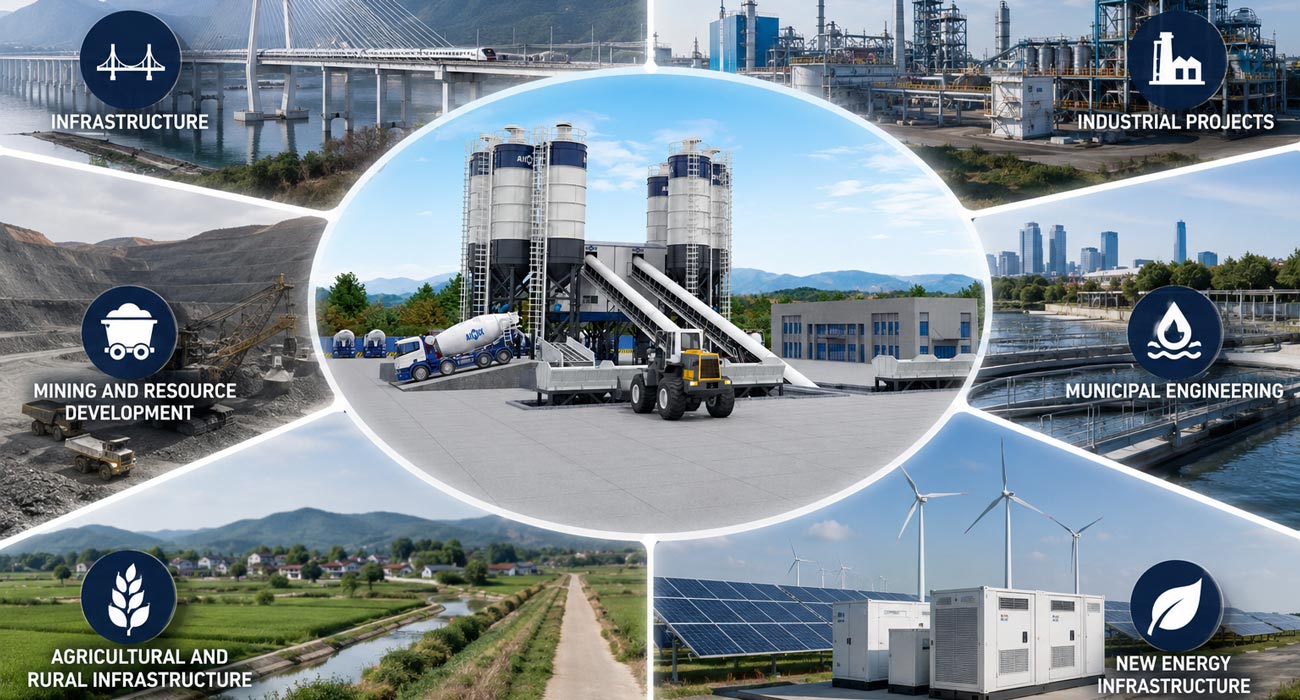
Infrastructure — A Core Segment Characterized by Stable Volume and Long Cycles
- Demand and Trends: Government infrastructure investment plans across various nations continue to be implemented. Projects in the transportation and energy sectors are relatively insulated from economic cycles, thereby generating a stable, long-term demand for concrete.
- Typical Projects: Railways, highways, bridges, ports, airports, dams, and new energy foundations (wind power, photovoltaics).
- Characteristics: Individual projects involve massive concrete volumes, utilize relatively standardized concrete grades, and span extended supply periods; consequently, they impose rigorous requirements on a mixing plant’s capacity for continuous operation and logistical distribution.
Industrial Projects — A Rapidly Growing Segment with Broad Geographic Distribution
- Demand and Trends: Trends such as manufacturing reshoring, the expansion of cross-border e-commerce warehousing, and a boom in data center construction are driving increased demand for industrial real estate, making this one of the fastest-growing sectors for concrete consumption.
- Typical Projects: Industrial parks, logistics and warehousing hubs, cold storage facilities, data centers, and manufacturing plants.
- Characteristics: Projects are geographically dispersed; while the concrete volume required for any single facility is moderate, the sheer number of projects is high. This places specific demands on a mixing plant’s response speed and its capacity for broad regional coverage.
Municipal Engineering — A Stable Source Characterized by High Continuity and Low Sensitivity to Economic Cycles
- Demand and Trends: As urban areas enter a phase of “stock renewal” (upgrading existing assets), maintenance and renovation projects—particularly those involving utility networks, roadways, and water infrastructure—account for an increasing share of activity. This category of demand remains relatively resilient to economic fluctuations.
- Typical Projects: Integrated underground utility corridors, sewage treatment plants, stormwater retention basins, road resurfacing, bridge reinforcement, and subway extensions.
- Characteristics: Individual concrete deliveries are typically small in volume, yet construction frequency is high. Work sites are often spatially constrained, making mobile mixing plants—deployed on-site to provide direct supply—a particularly suitable solution for many of these projects.
New Energy Infrastructure — A Rapidly Emerging Sector with Specialized Demands
- Demand and Trends: The global energy transition is accelerating, leading to concentrated construction cycles for new energy facilities—such as wind farms, solar power arrays, and energy storage systems. This creates periods of intense, high-volume demand for concrete within specific timeframes.
- Typical Projects: Foundations for onshore wind turbines, support structures for photovoltaic arrays, bases for energy storage stations, and sites for electric vehicle (EV) charging stations.
- Characteristics: Project locations are frequently situated in remote areas. These projects impose specialized requirements regarding the durability and crack resistance of the concrete used, necessitating that mixing plants possess the capability to execute either long-distance transportation or on-site mixing operations.
Agricultural and Rural Infrastructure — An Easily Overlooked Yet Substantial Sector
- Demand and Trends: Multiple regions globally are increasing investment in agricultural irrigation, livestock and poultry farming facilities, and rural road networks. While individual projects in this category are typically small in scale, their aggregate volume is substantial.
- Typical Projects: Irrigation canals, water reservoirs, paved surfaces for livestock farms, agricultural product processing sites, and rural access roads.
- Characteristics: Projects are geographically dispersed with relatively small concrete requirements per site; consequently, there is a high demand for equipment that offers both economic efficiency and operational flexibility. Mobile batching plants are particularly well-suited for these types of scenarios.
Mining and Resource Development — Regionally Concentrated, High-Intensity Demand
- Demand and Trends: In regions rich in mineral resources (such as Africa, Latin America, and Australia), ongoing activities—including mine expansions, tailings pond management, and the construction of ancillary facilities—generate a continuous and steady demand for concrete.
- Typical Projects: Mine-site access roads, foundations for ore processing plants, tailings pond containment dikes, and employee residential quarters.
- Characteristics: Demand is concentrated within specific geographic regions and is characterized by high intensity; this places stringent requirements on the concrete batching plants regarding both durability and ease of maintenance.
The six scenarios outlined above each possess distinct demand logics and project characteristics. Infrastructure provides a stable foundation; industrial projects contribute rapid incremental growth; municipal engineering serves as a steady source of demand resilient to cyclical fluctuations; new energy infrastructure is experiencing a rapid surge; agricultural and rural infrastructure constitutes a substantial—yet often overlooked—segment; and mining and resource development generate concentrated demand within specific regions. While the relative weight of these scenarios varies across different markets, they collectively point to a singular fact: the demand for concrete is becoming increasingly diversified, fragmented, and worthy of fresh scrutiny.
Regions and Structures: A Quick Look at the Global Concrete Market
| Region | Demand Structure Focus | Typical Project Types | Key Requirements for Batching Plants |
|---|---|---|---|
| Southeast Asia | Industrial + transport infrastructure (residential secondary) | Industrial parks, cross-border railways, port expansion, new town supporting facilities | Flexible mobility, quick service response, suitable for multiple small-to-medium projects in parallel |
| South Asia | Transport infrastructure + municipal (residential still sizable) | Highways, bridges, urban water supply, metro line extensions | High supply continuity, durable equipment, suitable for long-term high-intensity operations |
| Middle East | New city construction + energy facilities | Smart cities, airport expansion, solar farm foundations, desalination plants | High temperature resistance, strong dust protection, suitable for continuous supply of large-volume, high-grade concrete |
| Africa | Transport corridors + mining support + rural facilities | Cross-border highways, railways, mine access roads, reservoirs, small dams | High equipment reliability, easy maintenance, strong suitability for mobile batching plants |
| Latin America | Municipal renewal + mining (residential stabilizing) | Old pipeline renovation, road rehabilitation, copper/lithium mine supporting facilities | Adaptability to confined old urban sites, requirements for environmental and noise control |
| Europe/North America (mature markets) | Stock renewal + new energy infrastructure | Bridge reinforcement, pipe gallery replacement, wind turbine foundations, EV charging station sites | Strict environmental standards (emissions, noise, dust), demand for special concrete equipment |
The structural patterns of concrete demand across different regions are diverging along their own distinct paths. Southeast Asia centers its focus on industrial and transportation sectors; South Asia is driven primarily by infrastructure and municipal projects; the Middle East continues to see expansion in new city developments and energy initiatives; demand in Africa is concentrated within transportation corridors and mining support infrastructure; Latin America leans more toward municipal renewal; while the mature markets of Europe and North America have entered a phase characterized by the renovation of existing structures and the construction of new energy facilities.
As no two regional demand structures for wet mix plant are exactly alike, this implies that the configurations and service models of concrete batching plants must be correspondingly tailored to suit the specific requirements of their target markets.
How will changes in demand structure reshape the batching plant industry?
The shift in demand—from real estate toward new application scenarios such as infrastructure, industry, and municipal projects—is not merely a simple substitution of clients. Each category of project imposes distinct requirements regarding concrete supply methods, equipment performance, and ancillary services. These changes are, from multiple dimensions, gradually reshaping the operational logic of the concrete batching plant industry.
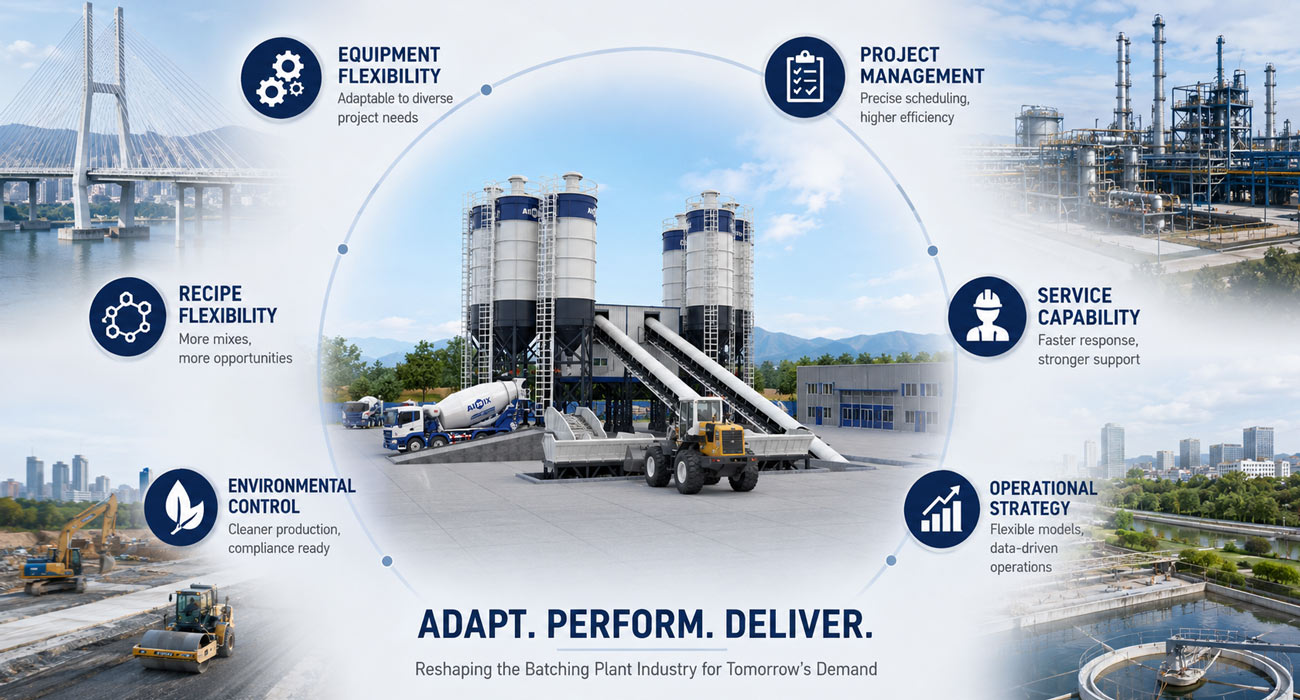
Equipment Configuration Level
- Recipe Flexibility Becomes the New Standard: Residential projects typically utilize C20–C30 grade concrete, whereas industrial flooring demands high abrasion resistance, utility tunnels require impermeability, and wind turbine foundations necessitate high durability. A batching plant unable to rapidly switch between recipes risks missing out on numerous orders.
- Demand for Small-Volume Discharges is Rising: Municipal and rural projects often require only a few dozen cubic meters of concrete per delivery, yet demand strict punctuality. Equipment must support more precise small-volume metering and rapid cleaning capabilities to prevent material waste caused by frequent recipe changes.
- Mobile Batching Plants Offer Greater Adaptability: Infrastructure and mining projects are often dispersed across various construction sites; a fixed batching plant must be dismantled and relocated once work at a specific site is complete. Mobile batching plants, conversely, can move along with the project, thereby reducing dismantling/assembly time and transportation costs.
- Environmental Controls Are No Longer Optional: Municipal projects are frequently situated within urban or suburban areas, subject to strict regulations regarding noise, dust, and wastewater discharge. Batching plants equipped with dust removal systems, enclosed aggregate bins, and wastewater recycling systems are far more likely to secure approval for such projects.
Project Management Level
- Shorter Project Cycles and Faster Paces: A residential housing development might require concrete supplies for anywhere from six months to a year, whereas a municipal road renovation project might last only two or three months. Batching plants must adapt to tighter construction schedules and more frequent transitions between orders.
- Concurrent Projects Become the Norm: A single batching plant may need to simultaneously serve three or four smaller projects rather than focusing on a single large-scale housing development. Consequently, the complexity of production scheduling, vehicle dispatching, and material inventory management increases significantly.
- Restricted Construction Sites and Increased Transport Challenges: Roads within older urban districts, rural areas, and mining zones often lack the infrastructure to accommodate large concrete mixer trucks. Consequently, the demand for smaller mixer trucks, truck-mounted pumps, and even on-site mixing solutions is re-emerging in specific scenarios.
- Increased Demand Volatility; Peak Management is Crucial: Infrastructure projects are susceptible to fluctuations driven by weather conditions, government policies, and funding disbursements, resulting in highly variable demand. Batching plants require flexible production capacity—capable of meeting short-term demand surges while simultaneously controlling costs during periods of low activity.
Service Capability Level
- Rising Demand for Pre-Sales Technical Support: Clients involved in industrial projects are often unsure of the specific concrete mix designs required for their applications. To build trust and secure contracts, batching plants must provide comprehensive pre-sales services, including mix design recommendations, test cube analysis, and solution optimization.
- Faster After-Sales Service Response: Municipal and rural projects are often geographically dispersed; a single equipment failure can potentially delay the entire project timeline. The ability of a service team to respond to issues within 24 hours is increasingly becoming a critical factor in procurement decisions.
- Operator Training is No Longer an Optional Extra: Many projects are located in regions where the skills of the local workforce are limited. Batching plant suppliers are now expected to provide on-site training covering equipment operation and routine maintenance to ensure that clients can operate the machinery independently.
- Spare Parts Supply Requires Greater Localization: Transporting spare parts over long distances often takes weeks, yet the cost of a single day of project downtime can be substantial. Establishing local spare parts inventories or partnering with regional distributors is rapidly becoming the standard service expectation for batching plant manufacturers.
Operational Strategy
- Rising Importance of Turnover Efficiency Amidst Project Fragmentation: In the past, a single large-scale residential development could sustain a batching plant’s continuous operation for an extended period; today, however, operations typically consist of an aggregation of multiple small-to-medium-sized projects. The equipment’s ability to switch rapidly between different orders—along with a sufficiently high asset turnover rate—are becoming key metrics requiring increased attention in day-to-day operations.
- Regional Deep-Penetration Strategies Offer a Clearer Path to Competitive Advantage: Demand structures vary significantly across different regions; by focusing service efforts on two or three specific types of typical projects within a single region, operators can effectively accumulate specialized experience and build a strong reputation. This focused strategy is being adopted by an increasing number of operators.
- Flexible Business Models Are Emerging in More Markets: Clients undertaking short-term projects—or those entering a new market for the first time—are sometimes reluctant to make immediate, substantial capital investments in purchasing equipment outright. Alternative options—such as leasing, volume-based billing, and outsourcing with included operators—are emerging as valuable supplements to traditional equipment sales models.
- Data-Driven Management is Becoming a New Tool for Efficiency: Features such as real-time monitoring of equipment status, output volume, fuel consumption, and fault alerts enable operators to gain a more precise and comprehensive understanding of their production environment. Furthermore, client demand for detailed data reports is on the rise, driven by the need to track and verify the consistency and quality of the concrete produced.
Equipment configuration requires greater flexibility, project management demands greater precision, service capabilities need to be more comprehensive, and business strategies must be better adapted to the trends of market fragmentation. For professionals in the concrete batching plant business, recognizing these shifts is merely the first step; more importantly, they must—based on their own specific positioning—identify the appropriate directions for adjustment that best suit their needs.
Opportunities are changing – how can you adjust your strategy?
We have discussed a number of changes—shifting demand, regional divergence, and the ongoing reshaping of the concrete batching plant industry. You might be wondering: “So, what should I do now?” Don’t worry; we have compiled a collection of real-world questions submitted by industry professionals at various stages of their careers, along with corresponding insights and strategies. Take a look—you might just find that one of these questions is exactly what you’ve been wanting to ask.
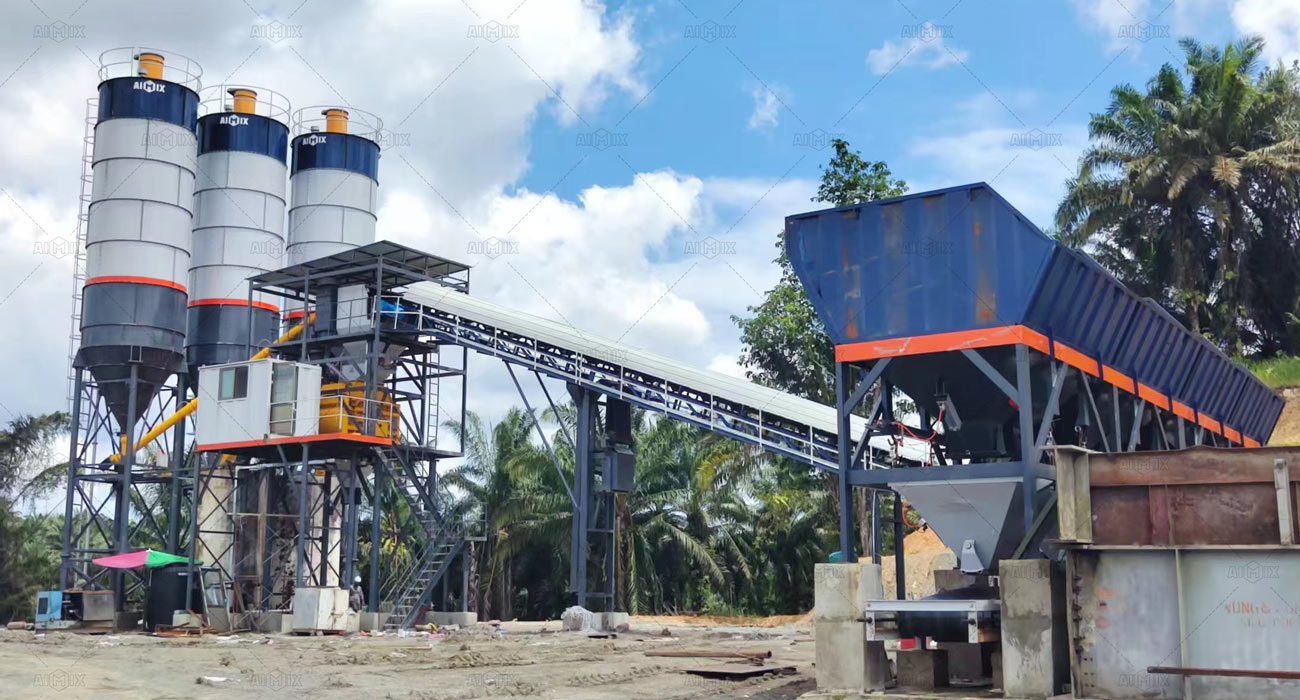
I’ve just entered this industry and don’t have much experience yet; is there still an opportunity for me?
I already own one or two stationary batching plants and primarily serve residential construction projects. Now that residential development has slowed down, what should I do?
I work in overseas engineering contracting and am considering purchasing a batching plant. What type should I choose?
My equipment has been in use for seven or eight years; can I continue using it, or should I replace it with something new?
I operate exclusively within a single geographic region; is it still necessary for me to pay attention to these broader market shifts?
The market is shifting, and opportunities are being redistributed; the key lies in identifying the most appropriate adjustments for your current stage. If you have any other questions, or would like to discuss your specific situation, please feel free to reach out to us at any time.
From Products to Services: How AIMIX Is Adapting and Preparing
As a professional concrete batching plant manufacturer, AIMIX continuously monitors market shifts in real time, constantly refining its equipment and services to ensure you select the machinery best suited to your current needs.
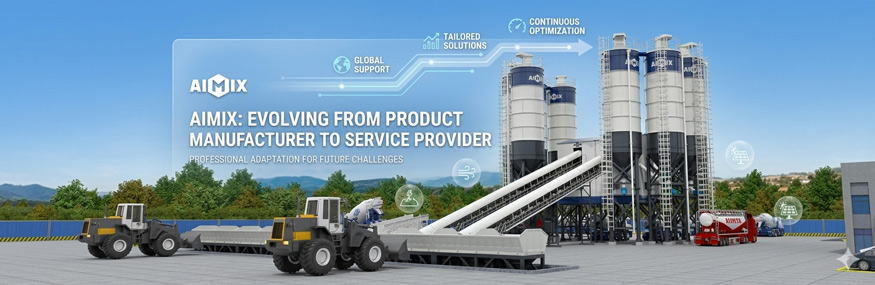
Product Configurations Tailored to New Scenarios
- Fixed Batching Plants Continue to Serve Long-Term Projects: Industrial parks, mining zones, and large-scale infrastructure projects still require stable, high-output equipment. Fixed plants have undergone continuous optimization regarding weighing precision and continuous operation capabilities to meet the rigorous demands of industrial-scale projects.
- Mobile Batching Plants Cater to Dispersed, Short-Cycle Projects: In scenarios such as municipal maintenance, rural road construction, and small-scale job sites, projects are often numerous, geographically dispersed, and have short timelines. Mobile plants can relocate alongside the construction site, thereby minimizing equipment downtime and reducing transportation costs.
- Control Systems Support Rapid Switching Between Multiple Mix Designs: Infrastructure and municipal projects frequently require concrete of varying grades and performance specifications. The equipment’s control system can store and rapidly recall multiple mix designs, effectively reducing cleaning and changeover times.
R&D Keeps Pace with Emerging Demands
- Equipment Parameters Adjusted for New Energy Projects: Applications such as wind turbine foundations and photovoltaic mounting structures impose stringent requirements on concrete durability. We are currently testing mixing hosts and mixing-time control logic specifically adapted for these project types, ensuring the equipment aligns more closely with practical operational needs.
- Higher Concrete Uniformity Standards for Industrial Flooring and Similar Applications: The construction of flooring for factory workshops and logistics warehouses demands concrete with excellent flowability and zero segregation. We have implemented targeted optimizations regarding both the structure of the mixing host and the mixing duration to meet these specific requirements.
- Enhanced Impermeability Requirements for Municipal Utility Tunnel Projects: Underground utility corridors, sewage treatment plants, and similar facilities require impermeable concrete. Our equipment offers more refined control options regarding admixture dosing systems and weighing precision to ensure these impermeability standards are met.
Overseas Support Adapted to Regional Differences
- Equipment Recommendations Tailored to Dominant Regional Project Types: Southeast Asia is characterized primarily by industrial parks and transportation projects; Africa by road construction and mining; and the Middle East by new city developments and energy projects. We provide targeted equipment selection recommendations based on the specific types of projects prevalent in the client’s region.
- On-Site Installation, Commissioning, and Training: Upon the arrival of the equipment, our technical personnel travel to the site to supervise installation and commissioning, as well as to train local operators, ensuring the equipment can be operated independently.
- Remote Assistance for Rapid Problem Diagnosis: For equipment equipped with intelligent control systems, we can utilize remote connectivity to assist in diagnosing faults and providing troubleshooting advice, thereby minimizing downtime and delays caused by geographical distance.
Cooperation Models: More Flexible and Long-Term Oriented
- Configuration Recommendations Based on Project Phase—Not Limited to a Single Model: Some clients require fixed batching plants for long-term, continuous production, while others require mobile batching plants to facilitate operations across multiple dispersed sites. We provide configuration recommendations that are specifically tailored to the client’s current project phase and operational requirements, rather than simply pushing a single, generic equipment model. We provide personalized configuration solutions tailored to your specific project timeline, production output requirements, and site conditions.
- Pre-project Consultation: For clients seeking to enter new markets or operational environments, we offer expert guidance on site planning, equipment layout, and production workflows, helping to minimize the costs associated with trial-and-error.
- Post-deployment Monitoring: We maintain continuous oversight of equipment usage following deployment, conducting regular follow-ups to assess operational status and identify any issues encountered. When necessary, we provide recommendations for optimization. Furthermore, we ensure a stable supply of spare parts to minimize downtime caused by waiting periods.
Change never happens overnight; yet, when it finally arrives, it often unfolds far more rapidly than anticipated. Global demand for concrete is clearly shifting away from the real estate sector and toward new domains—such as infrastructure, industrial projects, and municipal works. As an equipment manufacturer, AIMIX is committed to keeping pace with this trend—step by step—across our product offerings, R&D efforts, overseas support, and partnership models.
Our goal is to ensure that as you pivot toward new markets and projects, you face fewer uncertainties and possess greater confidence. If you are currently navigating this transition, or if you have your own insights on this topic, we invite you to reach out and engage with us at any time.